
Review Us
Kite Making in Bali 2026 – Creative craft workshops, fine motor development, and cultural learning for kids
author-2

Plan fun and educational home activities in Bali

Keeping children engaged at home in a tropical climate is difficult. Parents struggle to create meaningful play while managing remote work duties daily.

Many families in Indonesia lack resources that combine fun with cultural learning. Without a clear plan, the day becomes messy and stressful for everyone.

A lack of structure can slow a child’s cognitive development while living abroad. The chance to connect with local culture is missed entirely.

Staying at home with active children in the tropics often leads to boredom. Too much screen time makes kids restless and parents feeling exhausted.

According to child development in Indonesia, early stimulation is vital for healthy brain growth. Home activities in Bali turn your living space into a learning center.

Using local materials ensures that playtime is engaging and educational for your children. These curated tasks foster creativity and a deep love for local heritage.

Creating Cultural Crafts with Canang Sari

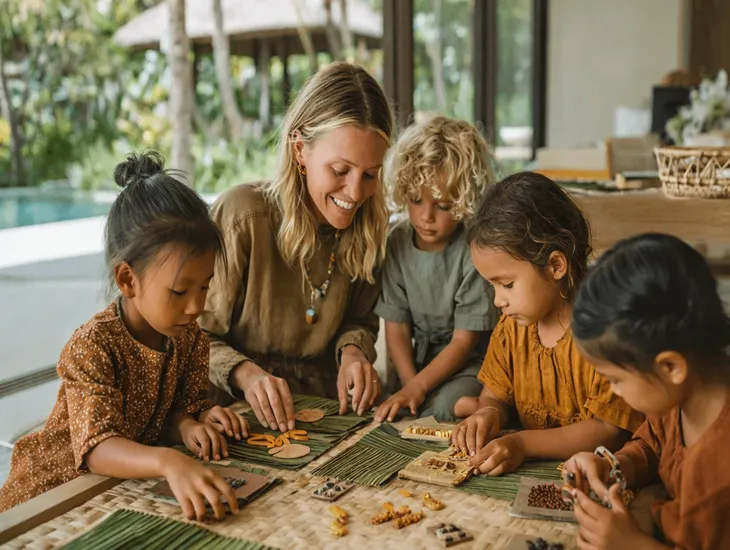
Making Canang Sari offerings is a great way to explore local traditions. Use banana leaves or paper plates to create a sturdy base for flowers.

Children practice fine motor skills while arranging the petals precisely. Explain the meaning of these offerings to build cultural literacy at home.

This creative process encourages patience and artistic expression. Kids enjoy the sensory experience of handling fresh flowers and rice.

You can find materials at any local market nearby. This connection to the community makes the craft feel authentic. It is a beautiful way to start an engaging morning.

Designing Kites and Masks in Bali

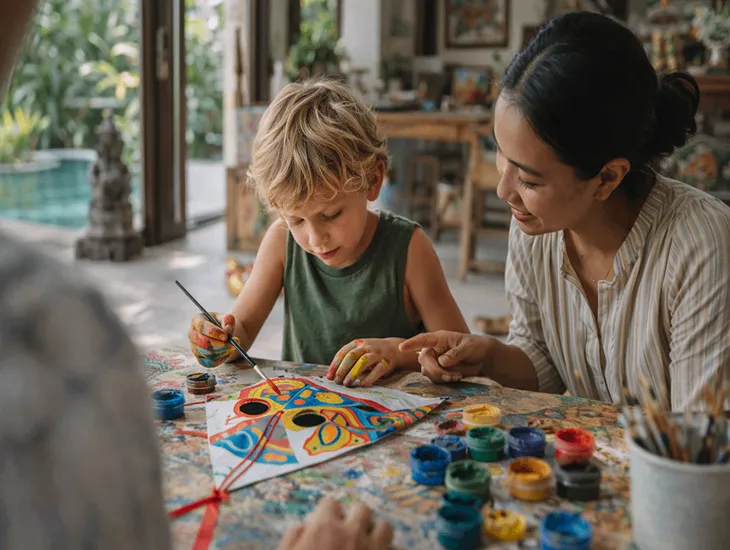
Artistic Play in Bali 2026 – Decorating traditional cardboard masks and kites with kids

Copying the vibrant designs of Ubud kite workshops provides endless entertainment. Have your children cut simple kite shapes from cardboard before painting.

Discuss the various patterns and colors they see across the island. This improves color recognition while reinforcing their connection to local art.

Decorating masks allows children to explore storytelling through art. They can perform a small play for you later. It is a great creative outlet.

Artistic play fosters independence as children make creative choices. It keeps them focused for long periods while you manage work. This balance is vital for families.
Playing Traditional Games for Strategic Skills

Recreate easy Indonesian games like Congklak using simple household items. An egg carton and some beans serve as a board for strategy.

Learning to plan moves helps develop cognitive skills. These games are excellent for building focus in your active children.

Cublak-cublak suweng is a group game involving a hidden stone. It teaches children about turn-taking while they enjoy the local language.

These games provide a break from digital entertainment. They are portable and can be played anywhere. Simple fun leads to meaningful learning.

Improving Coordination with Movement Games

Adapt movement games like Ular Naga to practice coordination. Children form a “dragon snake” and navigate obstacles without breaking the chain.

Chasing games provide a physical outlet for high energy. These active tasks ensure your kids stay healthy and physically fit.

Turn-taking during these games fosters social skills. Children learn to follow rules and respect their peers. It is a vital part of development.

You can play these games in a hallway easily. Physical movement helps children sleep better. It reduces daytime restlessness for everyone.

Learning Indonesian through Kitchen Activities

Let your children help with food tasks like peeling bananas. Assembling fruit skewers is a safe way to practice hand-eye coordination.

Labeling ingredients in Indonesian adds an educational layer. Use word cards for “nasi” to help them match labels in the villa kitchen.

This practice builds vocabulary and math skills through counting. These tasty home activities in Bali engage all the senses for your kids.

Cooking together creates lasting memories. It encourages kids to try new flavors. They appreciate the effort that goes into a healthy meal.

Real Story: Finding Balance in Uluwatu

Childcare in Bali 2026 – Engaging home-based learning and cultural immersion for expat children

Freya sat at her desk in Uluwatu, trying to focus on a design deadline. Her daughter stared blankly at a tablet. The humidity outside was thick, making the afternoon feel endless.

Her daughter had stopped asking to play and started withdrawing into screens. Clearly, she missed the life they left behind in Norway. The tropical dream was becoming a struggle.

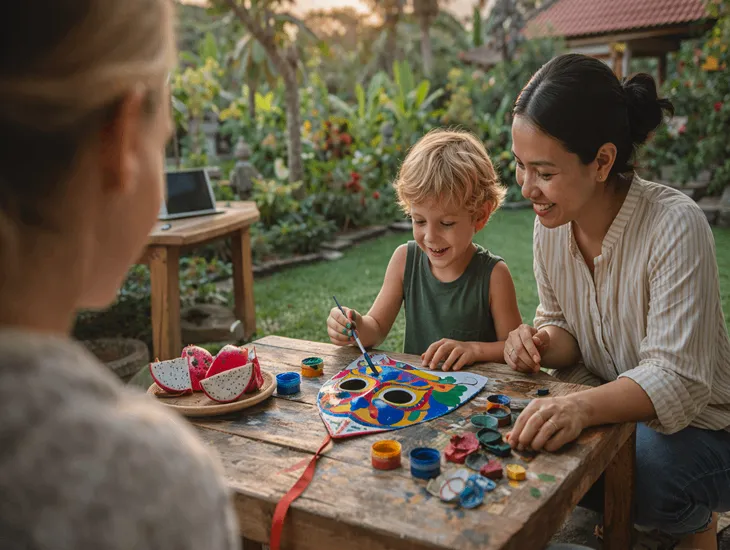
Freya used bali-nanny.com to find a professional caregiver for support. They began making elaborate paper masks together in the garden. This new structure provided the security she needed.

Tasting fresh dragon fruit while painting traditional patterns helped her settle. She soon started learning her first Indonesian words. The shift to these home activities in Bali restored her joy.

Storytelling with Shadow Puppets and Music

Use a lamp to create shadow-puppet storytelling sessions at home. Paper cut-outs of animals help echo the wayang kulit theater found in Indonesia.

Narrating short stories improves listening and narrative skills. High-authority parenting portals suggest storytelling as a vital way to reduce child burnout.

Playing a gamelan playlist allows children to explore rhythms. They can perform a small dance for the family.

Music and storytelling foster a love for the arts. These activities are perfect for winding down. They provide a calm end to the day.

Exploring Nature in Your Garden

Send your kids on a “field study” in the garden. Have them draw three unique plants and label them tonight.

Spotting a “semut” or ant helps build science vocabulary. These tasks encourage a deep respect for the tropical ecosystem.

End the day by sticking drawings on a “Bali board.” This reflection helps solidify what they learned today.

Encouraging curiosity about nature helps children become environmentally conscious. The garden is a perfect classroom for any scientist.

FAQs about home activities in Bali​

Q: What is the best age for canang-making?

A: Children as young as four enjoy arranging the flowers with adult supervision.

Q: Do I need special tools for kite art?

A: No, you can use recycled cardboard, scissors, and any coloring supplies you have.

Q: Are traditional games hard to learn?

A: Most are very simple and focus on counting or basic strategy for kids.

Q: How often should we do these activities?

A: Weaving them into a daily routine provides the most educational benefit for children.

Q: Is it safe for kids in the kitchen? A: Yes, provided they use kid-safe tools and have constant adult supervision nearby.

Need help with home activities in Bali, Chat with our team on WhatsApp now!