
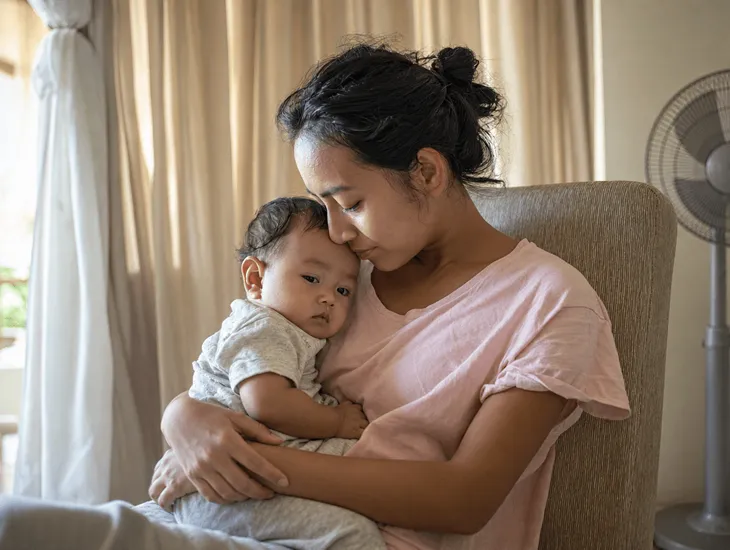
Babies begin life unable to manage intense emotions. They rely on caregivers to buffer stress. Rhythmic play and gentle rocking help them learn to settle themselves gradually over time.
Infant-directed songs reduce physiological stress markers more than speech. When a person in Bali sings a lullaby, the baby’s arousal levels decrease. This creates a foundation for lifelong resilience.
Synchronous touch and movement support the baby’s natural physical rhythms. Bouncing gently while singing supports better sleep patterns for infants. This is essential during the hot days in Bali.
Caregivers provide the emotional safety net required for early growth. Consistent interaction reduces the impact of external stressors. This helps the infant maintain a calm and steady state.
Predictable routines act as a stress buffer. When a baby knows what happens next, their anxiety levels drop. This security is vital for babies living in a foreign country.
Rocking provides vestibular stimulation which calms the nervous system. It mimics the sensations felt in the womb. This familiar feeling helps babies manage their transition to the outside world.
Emotional regulation is the first pillar of early brain development. It allows the infant to focus on learning other complex skills. A calm baby is a baby ready to explore.
Professional care focuses on these subtle emotional needs. Your child learns to trust their environment through warm engagement. This trust is the basis for all future social connections.
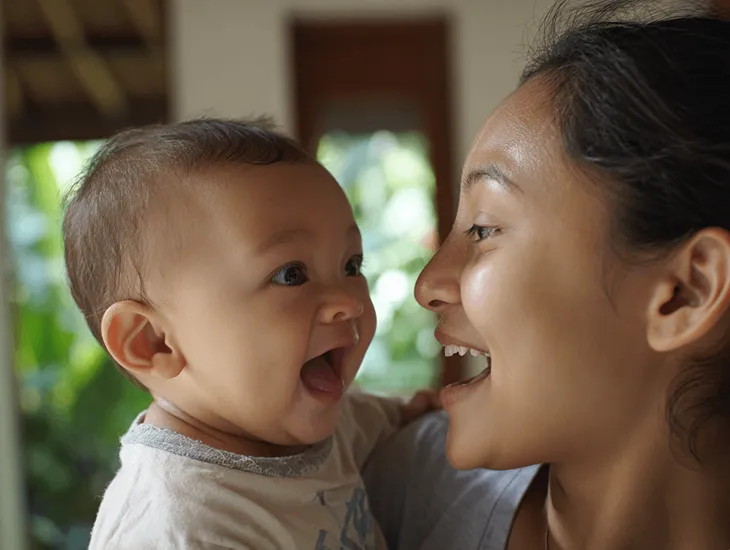
Eye contact and facial expressions are the first steps toward social understanding. Babies use these cues to build trust and attachment with their primary caregivers during their daily routines.
Live, responsive singing strengthens the bond between an infant and a in Bali. These shared emotional experiences modulate the baby’s mood based on the caregiver’s warm and active engagement.
Early interaction creates turn-taking foundations that eventually become conversation. Through these Skills Babies Learn Naturally, infants discover the joy of connecting with others in their immediate social circle.
Responsive play encourages the baby to express their needs clearly. When a caregiver reacts to a smile or a coo, the baby learns their voice has a meaningful impact on others.
Attachment is a biological necessity for healthy infant development. It provides the security needed for the baby to eventually venture out and explore their surroundings with confidence and curiosity.
A dedicated person in Indonesia avoids passive caregiving. They prioritize face-to-face time during every feeding and diaper change. This ensures the baby feels seen, heard, and deeply valued every day.
Social skills are built through thousands of small, warm moments. These interactions help the baby understand social boundaries and empathy. They learn to read the emotions of those around them.
Trust is the ultimate goal of early social play. A baby who trusts their caregiver is more likely to thrive. This connection is the primary engine for all early learning.
Musical rhythm experience improves how the brain processes speech patterns. Research shows that early singing interactions facilitate vocabulary building. These sessions predict better language scores as the child grows older.
Distinguishing speech sounds and intonation is a complex cognitive task. Babies map these sounds to meaning through repeated interactions. They learn to follow the temporal structure of language through melody.
Narrating daily routines helps infants in bilingual or multilingual homes. If you have a second language, these sounds become vital for early communication and building strong literacy foundations.
A babbysitter in Bali who talks to your baby supports brain growth. They describe the world around the infant during every walk. This constant stream of language builds a rich mental dictionary.
Repeating simple words helps the baby recognize familiar sounds. Consistency is the key to mapping language to specific objects. The baby learns that the word “bottle” always means a drink.
Singing nursery rhymes introduces the concept of rhyming and syllables. These rhythmic patterns are easier for the infant brain to process. They provide a joyful way to learn new vocabulary.
Responding to babbling is a form of early conversation. It teaches the baby that their sounds are important. This encouragement motivates the infant to keep practicing their emerging vocal skills.
Language processing is a natural byproduct of a vocal environment. The more a baby hears, the more they learn. Professional caregivers ensure your home is filled with high-quality language interaction.
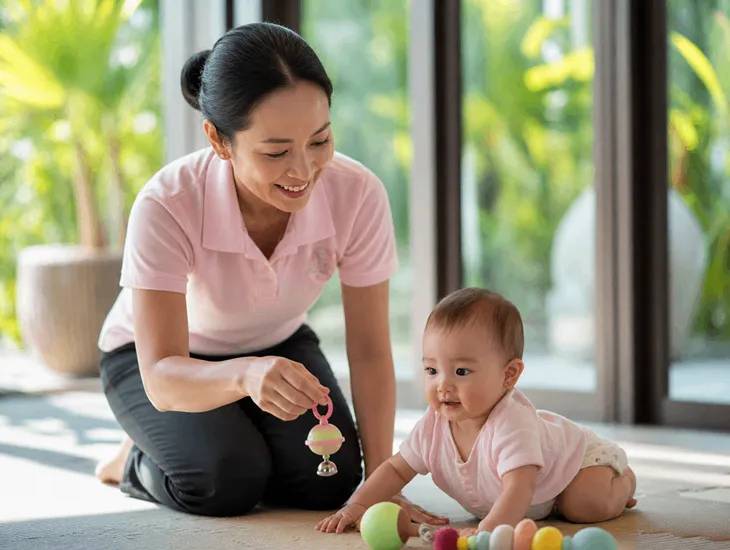
Rhythmic experiences sharpen the ability to notice what comes next. This pattern recognition is a building block for future problem-solving. It helps babies navigate a world of changing sounds.
Tracking moving objects and responding to cause-and-effect play are normal milestones. A in Bali uses peekaboo and simple toys to strengthen these essential focus-related abilities every single day.
Recognizing patterns in sound and movement is part of the Skills Babies Learn Naturally. Infants eventually link bath time and a specific song to the start of their sleep routine.
Focusing on a single task requires a quiet and organized environment. A caregiver ensures the baby is not overwhelmed by too many toys. They encourage the baby to explore one object deeply.
Pattern recognition extends to social routines as well. The baby learns the sequence of getting dressed or preparing for a meal. This predictability reduces anxiety and improves the baby’s overall attention span.
Musical stimulation improves the detection of auditory patterns. The baby learns to predict the next note in a familiar song. This predictive ability is a core component of early cognitive thinking.
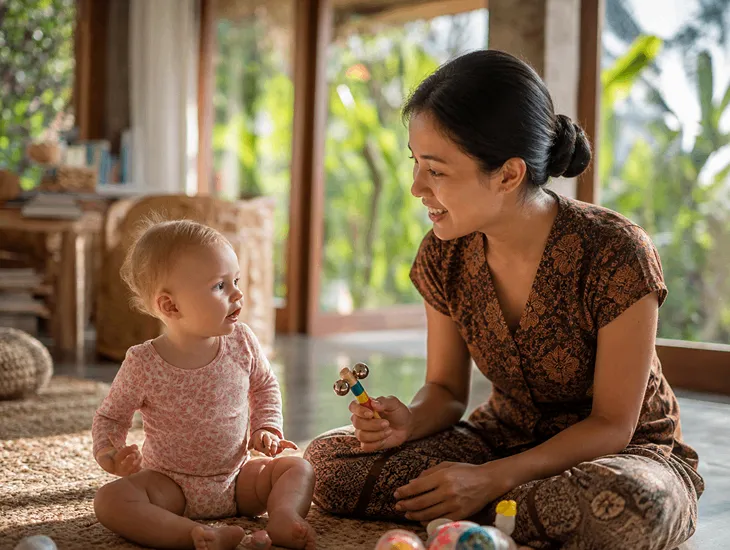
Cause-and-effect toys, like rattles, teach the baby they can influence their world. When they shake the toy, it makes a sound. This discovery is a thrilling step in their mental development.
A good babysitter leverages repetition to build memory. They play the same games and sing the same songs. This consistency allows the baby to master patterns and feel successful.
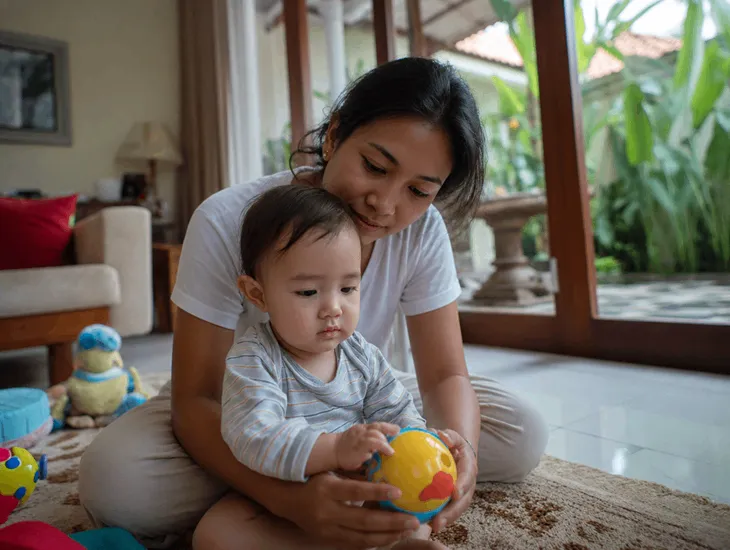
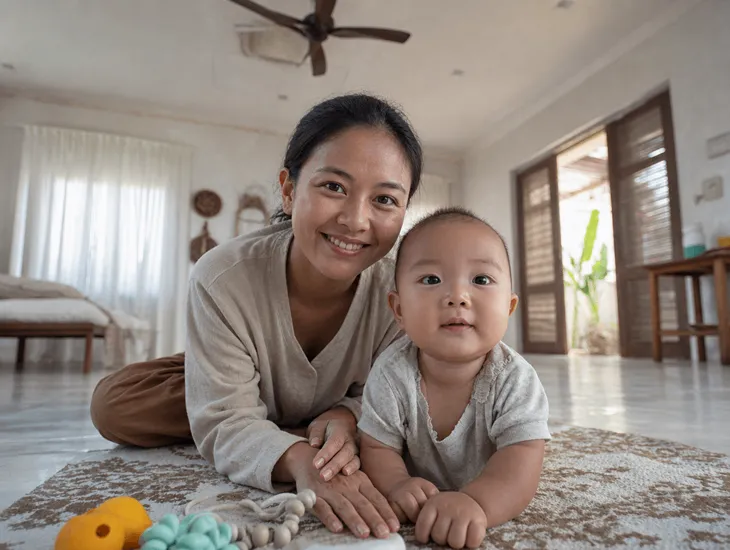
Floor time provides the perfect space for infants to explore their bodies. Reaching, rolling, and crawling are the physical manifestations of growth. Purposeful play supports these motor milestones safely.
Using simple instruments like shakers helps infants coordinate their movements. A babysitter in Bali structures floor play to invite kicking and grasping. This builds spatial orientation and physical confidence.
Linking physical sensations with movement is an essential part of early development. Clapping and tapping along to a rhythmic beat helps babies discover what their bodies can achieve.
Body awareness develops through touch and movement. When gently moving a baby’s legs, the infant feels their muscles. This sensory input is essential for planning future physical actions.
Tummy time is a critical exercise for neck and back strength. A caregiver stays on the floor with the baby to offer encouragement. They use mirrors or toys to keep the baby engaged.
Grasping different textures helps refine fine motor skills. Babies learn to adjust their grip based on the object’s size. This precision is necessary for eventually holding a spoon or a crayon.
Bouncing to music helps infants internalize a sense of rhythm and timing. They learn to coordinate their movements with an external beat. This synchronization is a sophisticated feat for a young brain.
Safe environments allow for endless practice. A caregiver ensures the villa floors are clean and free of hazards. This freedom to move is the best way to support physical development.
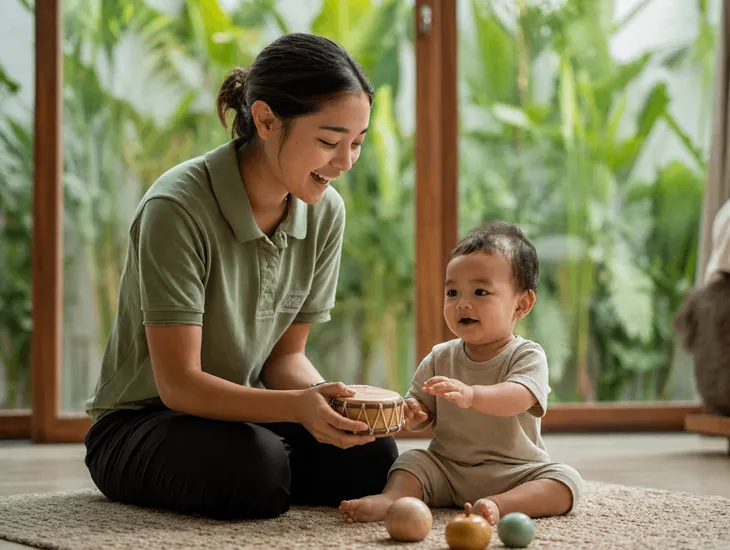
Sensitivity to rhythm is present from birth. Infants detect rhythmic structures and show early preferences for specific tunes. These innate capacities recruit attention, memory, and motor systems simultaneously.
Early musical interactions predict later social abilities and communicative gestures. An infant remembers familiar songs and engages more strongly with them. This builds a sense of comfort in new environments.
Internalizing timing and building musical memory are natural processes. A music-aware babysitter in Bali uses a small set of repeated songs to reinforce these early cognitive connections.
Musical preferences are shaped by early exposure. Babies who hear a variety of melodies develop a more complex auditory palette. This enrichment supports their overall appreciation for the world’s diverse sounds.
Memory is strengthened through the repetition of favorite nursery rhymes. The baby learns to anticipate the “boo” in a game or the final note of a song. This anticipation is a sign of healthy brain growth.
Rhythmic structure provides a sense of order to the infant’s world. It is predictable and soothing. A caregiver uses this order to help the baby transition through different parts of the day.
Musical play is a holistic experience. It involves hearing, seeing, and moving all at once. This multisensory engagement is the most effective way to stimulate a developing infant brain.