
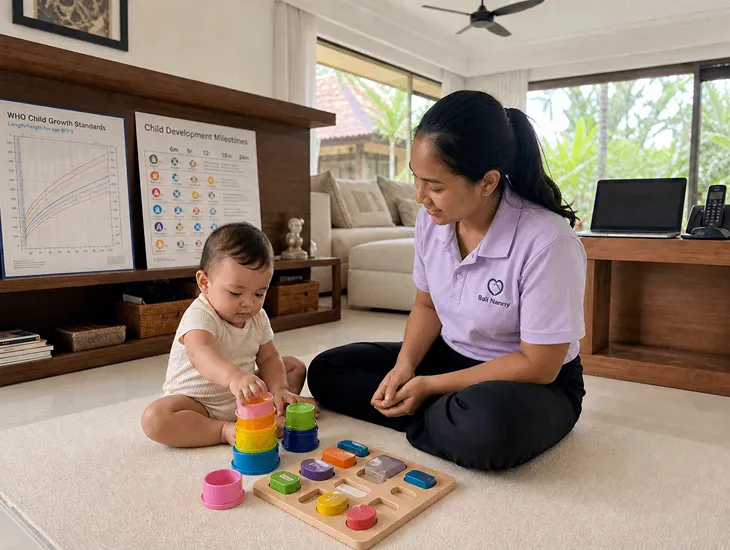
What Signs Show Healthy Growth for Baby in Bali at 10 Months
Tracking infant development in a foreign country causes anxiety for expatriate parents. Balancing a remote work schedule while monitoring new developmental phases requires significant focus. Parents worry without a familiar pediatric network.
Missing warning signs leads to delayed interventions. Juggling clinic visits and managing tropical health risks without support is a difficult task. Relying on untrained helpers means subtle shifts might go unnoticed.
You can find official World Health Organization guidelines to understand the requirements for monitoring infant growth. These standards provide a reliable baseline for expatriate parents navigating early childhood development locally.
Securing professional care provides structured daily observation for your child. A vetted babysitter tracks the key signs of healthy growth for baby in Bali. This support allows parents to work with confidence.
Expert oversight turns developmental monitoring into a consistent daily routine. The babysitter acts as a trained observer, noting small changes in motor skills and social engagement before upcoming pediatrician appointments.
Delegating these tasks to a professional reduces parental burnout significantly. It ensures the child receives dedicated, developmentally appropriate stimulation while parents fulfill their professional obligations without constant underlying worry.
Table of Contents
Steady Physical Growth Trends
The World Health Organization emphasizes tracking growth trends rather than single numbers. A healthy infant’s weight should increase steadily. Indonesian references indicate an ideal weight for ten-month-old boys is 8.2 to 10.2 kilograms.
For girls, the healthy band is 7.5 to 9.6 kilograms. Individual variation is expected, but the primary focus is consistent progress. Regular measurements at local clinics confirm the child develops correctly within their curve.
Tracking head circumference is another vital anthropometric measurement. It reflects brain growth accurately. Pediatricians monitor this metric alongside weight to ensure comprehensive development during the first year.
If weight gain plateaus, pediatric review is necessary. A trained caregiver helps parents track this data after clinic visits. A professional babysitter ensures feeding routines support steady progress and provide a foundation for thriving.
Motor Milestones Around 10 Months
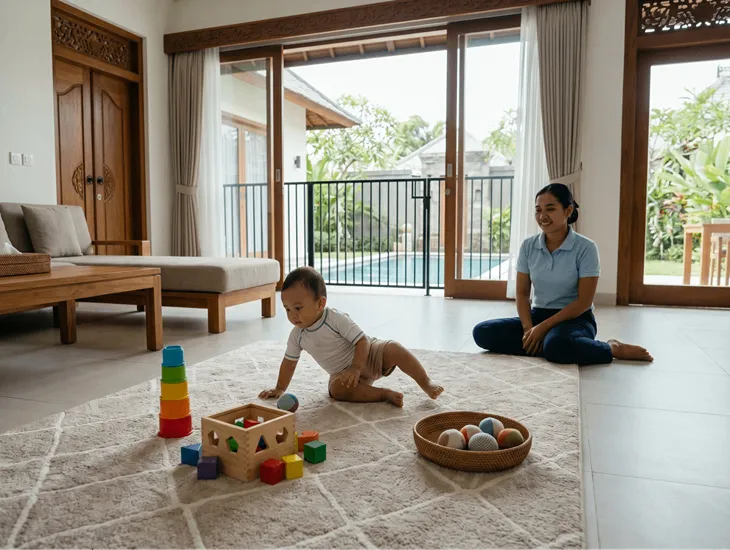
Gross motor skills expand at ten months. A healthy baby sits well without support and transitions in and out of a sitting position independently. Many infants at this age crawl or shuffle efficiently.
They often pull themselves up to stand and begin cruising along furniture. Fine motor skills also show improvement as the infant uses a pincer grasp to pick up small items.
Banging objects together and taking items out of containers indicate coordination. Red flags include an inability to sit unsupported. An experienced babysitter provides daily floor time practice away from hazards like pools.
Social and Communication Development
Social development involves clear interactive behaviors. A healthy infant responds to their name and understands simple commands. They look at familiar people when they speak and use syllables like “mamama” or “bababa.”
The baby may imitate sounds and gestures or say simple words. Showing emotions like joy or frustration is a positive sign. Infants often wave bye-bye and point at objects of interest during interactive games.
Pointing at desired items demonstrates advanced cognitive intent. This non-verbal communication bridges the gap before expressive language fully develops. Caregivers should consistently acknowledge and name these pointed objects.
Separation anxiety is a normal sign of emotional development. Red flags include poor eye contact or no babbling. A consistent babysitter provides rich daily communication and notices subtle changes in responsiveness.
Age-Appropriate Feeding and Sleep
Proper nutrition is essential for a ten-month-old. WHO guidelines suggest three to four small meals of solid foods daily plus snacks. Infants handle soft, finger-sized pieces and mashed foods.
They often feed themselves to develop fine motor skills and independence. Sleep patterns usually involve eleven to twelve hours at night plus daytime naps. Consistent rest is vital for neurological development during this phase.
Poor weight gain or recurrent choking are significant red flags. Disrupted sleep combined with breathing issues requires medical review. A trained babysitter maintains strict meal routines to support steady physical maturation in infants.
Active Play and Exploration
A ten-month-old is naturally curious and active. They crawl to explore and search for partially hidden objects. This demonstrates a developing understanding of object permanence.
Providing safe objects with different textures encourages sensory development. Infants learn through tactile exploration. A structured environment allows them to safely investigate items like wooden blocks or soft fabrics.
Enjoying games like peek-a-boo shows healthy cognitive engagement. The infant engages in interactive play and seeks comfort from familiar adults. Responsive play supports cognitive and social growth.
Interaction stimulates neural pathways and lays the groundwork for problem-solving skills. Sitters are trained to provide daily stimulation aligned with global recommendations. They use songs and games to ensure your child thrives.
Real Story: Tracking Milestones in Sanur, Bali
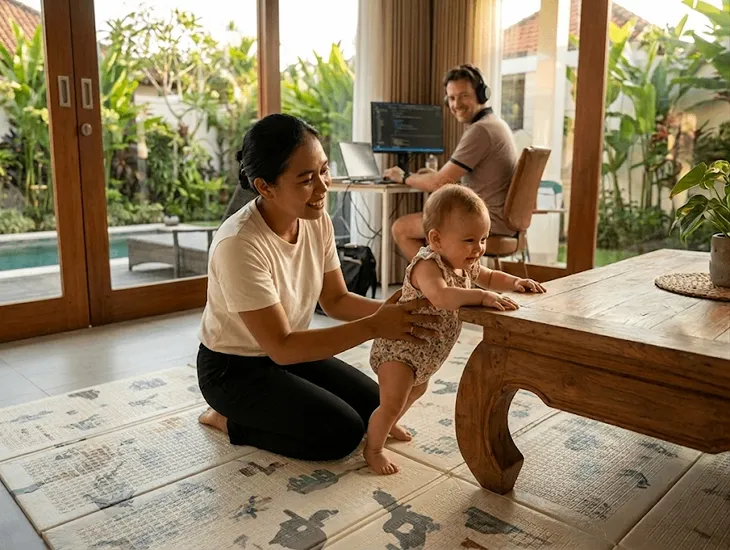
Joseph sat in his quiet Sanur office, the low hum of the air conditioner barely masking the silence from the playroom. The software developer from the UK struggled to track motor milestones during his sprints.
His informally hired helper lacked the knowledge to encourage crawling or identify subtle motor shifts. He noticed his daughter remained stationary on the cool floor. Joseph hired our agency for a vetted babysitter in Bali.
The babysitter in Bali immediately introduced structured floor time. Within weeks, the baby began pulling to stand confidently against the heavy teak furniture. Joseph focused on his coding deadlines while his daughter flourished.
Tropical Health Monitoring in Indonesia
Indonesian public health programs emphasize growth monitoring to detect issues early. Expatriate families utilize local pediatric clinics for monthly weigh-ins. Pediatricians apply WHO charts and check-ups at ten months.
Dengue fever is a persistent threat requiring diligent observation. A high fever demands immediate clinical testing. Early detection is paramount for safely managing this endemic tropical disease.
Tropical environments present challenges like high heat and mosquito-borne illnesses. Caregivers must be vigilant as minor illness can temporarily stall weight gain. Monitoring hydration is critical during the dry season.
A sudden drop in energy requires immediate attention to prevent dehydration. A professional babysitter helps parents keep official clinic appointments. They maintain accurate growth logs to ensure continuous support.
Supporting Healthy Growth for Baby in Bali
Healthy growth is multi-dimensional. It requires steady weight gain, age-appropriate movement, and social milestones. Managing all these factors simultaneously is difficult for busy parents.
A vetted babysitter provides consistent, development-aware caregiving. They support routines aligned with international standards. They are trained to notice early warning signs of developmental delays or illness.
They provide daily observations and detailed updates. Hiring an expert ensures dedicated stimulation for your infant. The babysitter focuses on well-being while parents attend to professional commitments.
FAQs about Infant Milestones
Q: How much should a ten-month-old weigh?
A: Boys typically weigh 8.2–10.2 kg and girls 7.5–9.6 kg. Steady upward trends matter most.
Q: Should my baby walk at ten months?
A: Most crawl or pull to stand. Taking independent steps is less common but possible at this age.
Q: What are social red flags?
A: Lack of eye contact, no response to their name, or no babbling requires pediatric review.
Q: How much sleep is needed?
A: They usually need 11–12 hours at night plus 2–3 hours split across daily naps.
Q: Can a sitter help with milestones?
A: Yes. Trained babysitters observe and report on motor, social, and feeding milestones accurately.
Q: Is separation anxiety normal?
A: Yes. Strong attachment to caregivers and anxiety around strangers is a healthy sign.