

Review Us
Full-Time Live-In Babysitter in Bali 2026 – Professional caregiver monitoring toddlers at home
author

Full-Time Live-In Babysitter in Bali: Cost Guide for Families

Moving to Indonesia represents a wonderful shift for families. However, managing daily childcare schedules creates significant logistical stress for working parents adapting to a new environment.

Relying on casual advice can lead to underpayment, increasing the risk of sudden resignations and childcare gaps. You need certainty before leaving your children with an unfamiliar worker.

Language barriers and complex labor laws complicate the hiring process. Navigating these requirements blindly results in frustrating domestic arrangements that disrupt your peaceful family life.

Proper qualification verification requires administrative effort. Reputable agencies handle this screening process so parents can hire safely. You deserve a routine that supports your professional goals.

A Full-Time Live-In Babysitter in Bali provides the support you need. According to the Indonesian Ministry of Manpower, following fair employment standards ensures long-term household stability.

This guide breaks down costs associated with premium care. Explore salary tiers, mandatory bonuses, and accommodation standards for your private household to budget accurately.

Monthly Salary Tiers for Domestic Support

Monthly salaries for domestic help vary based on experience. Budget tiers typically range from three to four million Rupiah. These workers often possess limited English skills.

Mid-range caregivers earn between four and five million Rupiah. They usually have basic first aid training and several years of experience. This tier suits many digital nomad families.

Professional caregivers earn between six and seven million Rupiah. A Full-Time Live-In Babysitter in Bali offers verified experience and fluent English. Agencies usually vet these individuals for expatriate households.

Premium tiers reach nine million Rupiah monthly. These specialists hold international certifications in newborn care or special needs. They provide the highest level of pediatric expertise available locally.

Choosing the right tier depends on your specific household needs. Families with infants often prioritize professional experience over lower costs. Reliability is essential for remote corporate workers.

Market demand remains high for experienced English speakers. Competitive salaries attract dedicated professionals who seek long-term employment. Always pay fairly to ensure loyalty and quality care.

Managing multiple toddlers requires intense focus. This elevated workload requires higher compensation to prevent caregiver burnout. Balance your budget while acknowledging the demanding nature of childcare.

Live-In vs Live-Out Cost Breakdown

Full-Time Live-In Babysitter in Bali 2026 – Local caregiver preparing healthy organic meals safely

Hiring live-in help involves providing room and board. This arrangement justifies a lower cash salary compared to live-out roles. Total compensation includes salary, meals, and private utilities.

Free private accommodation is valued at two million Rupiah monthly. Providing all daily meals adds significant value to the package. Your staff also benefits from free electricity and internet.

Live-out staff require higher salaries to cover their own rent. They often request additional transport allowances for their daily scooter commutes. This increases your monthly cash outflow significantly.

A dedicated live-in professional often saves you money. Eliminating transport fees and reducing base salary makes this a cost-effective choice. It ensures support is available for emergencies.

Most expatriate villas already include an extra bedroom for staff. Utilizing this space maximizes the value of your monthly rental agreement. It provides your domestic worker with stable living.

Total compensation value for live-in staff can exceed ten million Rupiah. This includes the base pay plus the calculated value of living expenses. Consider both cash and non-cash benefits.

Clear communication regarding meal provisions is vital for success. Discuss dietary preferences and kitchen access during the initial hiring phase. Mutual respect for living spaces builds a strong bond.
Short-Term Nightly Rates for Vacationers

Holiday families often require overnight care for short durations. Nightly rates for professional agencies start at two million Rupiah. This covers active care and overnight monitoring for toddlers.

Mid-range nightly services cost approximately one hundred dollars daily. These arrangements include fourteen hours of active childcare and on-call availability. Meals are typically provided by the host family.

Budget nightly options range around one million Rupiah. However, these services may lack rigorous background checks and certifications. Safety should remain your primary concern for short-term vacation bookings.

Weekly packages provide better value for families staying for fourteen days. Agencies often offer ten percent discounts for consecutive multi-day bookings. This ensures your children bond with a consistent caregiver.

Transport fees are usually separate for short-term agency staff. These fees cover the worker commute to your resort or villa. Always confirm the total price before finalizing your booking.

Professional agencies manage all logistics and staff replacements for you. If your assigned worker becomes ill, a backup arrives immediately. This guarantee protects your planned excursions and dinner reservations.

Vacation care allows parents to enjoy adult activities safely. Explore surfing or spa treatments while your children play. Structured play sessions keep your kids entertained throughout the holiday.

Mandatory Benefits and Indonesian Labor Law

Indonesian labor law mandates a religious holiday bonus for staff. This payment is known locally as Tunjangan Hari Raya or THR. It equals exactly one month of base salary annually.

You must pay this bonus before Nyepi or Lebaran. Prorating this cost adds roughly five hundred thousand Rupiah monthly. Budgeting for this legal requirement prevents unexpected financial stress.

National health insurance contributions are expected for professional domestic employment. Employers typically contribute one hundred fifty thousand Rupiah monthly. This ensures your staff has access to government healthcare.

Paid annual leave is another legal standard in Indonesia today. Staff are entitled to twelve days of paid time off yearly. Respecting these boundaries ensures a sustainable working relationship.

Sick leave should also be discussed and documented clearly. Most families provide up to twelve days of paid sick leave. This practice prevents the spread of illness at home.

Ethical employment builds deep loyalty and reduces staff turnover rates. Happy domestic workers provide a higher standard of care for children. Follow local regulations to protect your family.

Documenting these benefits in a written contract is essential. Clear terms regarding pay dates and leave policies prevent disputes. You demonstrate a commitment to ethical hiring practices.

Accommodation Standards for Household Staff

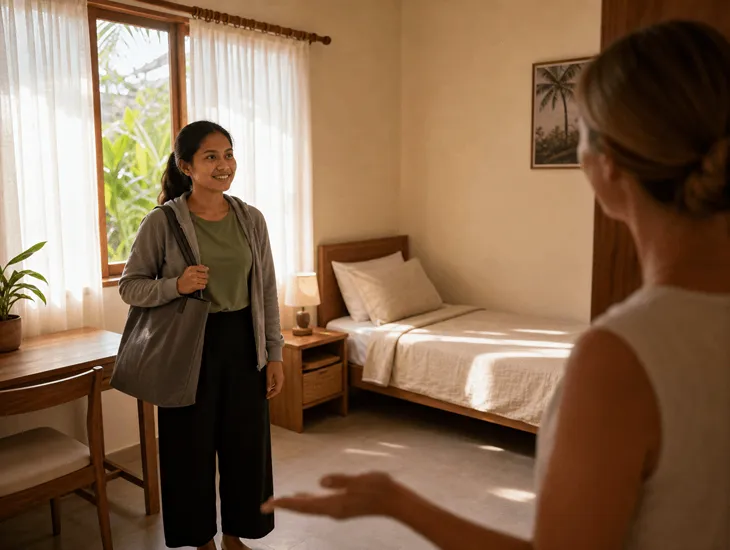
Providing a private room is the preferred standard for staff. This space should include a bed, wardrobe, and basic furnishings. Privacy is crucial for maintaining long-term job satisfaction.

Sharing a room with children is common for short-term care. This allows for immediate response to infant needs during the night. However, it may lead to burnout long-term.

Your villa must provide clean bathroom access for domestic staff. A live-in household worker requires storage for personal belongings. Ensure the room has adequate ventilation.

WiFi access is now considered a mandatory inclusion for workers. It allows them to communicate with their own families during off-hours. This small perk significantly improves worker quality of life.

Kitchen access should be pre-arranged for meal preparation needs. Discuss whether the staff eats with the family or separately. Providing a monthly food budget is a professional alternative.

Climate control options depend on your specific villa amenities. Most staff rooms include a fan for comfort during humid nights. Air conditioning is a premium feature attracting top-tier candidates.

Respecting your caregiver’s private space is essential for harmony. Establish clear house rules regarding guests and personal time boundaries. A respectful environment leads to better care for your toddlers.

Real Story: Securing Childcare in Pererenan

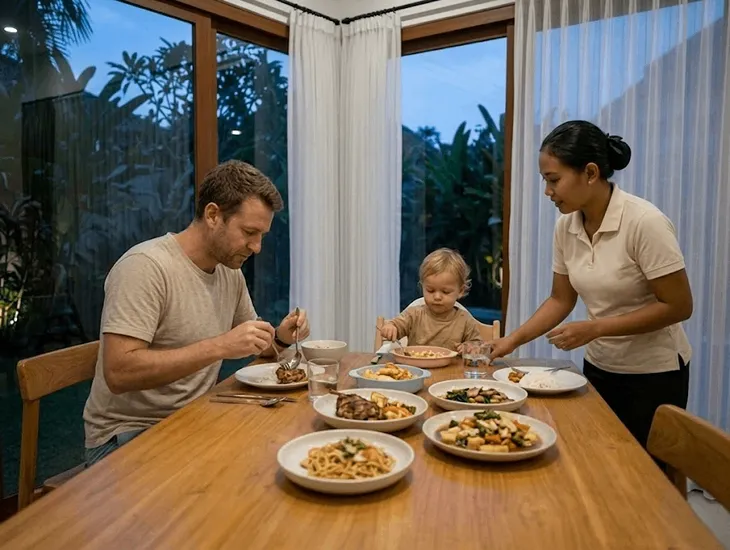
Full-Time Live-In Babysitter in Bali 2026 – Australian expatriate family enjoying dinner at home

James from Australia needed reliable childcare to manage his active toddler and remote work schedule after relocating to Pererenan. He initially attempted to manage the hiring process himself.

Relying on casual advice, he hired an independent worker at a budget rate. He soon realized that handling complex scheduling and tracking local public holidays required unexpected administrative effort.

The low pay led to sudden resignations, leaving James with dangerous gaps in his daily childcare supervision. He scrambled to cover his work meetings while managing a toddler alone.

Recognizing his mistake, James contacted a registered agency to handle the complex screening process. He needed a dedicated professional who understood strict international safety standards and reliable scheduling.

The agency provided a highly trained caregiver with verified references and pediatric first aid training. The structured contract included mandatory benefits, ensuring a fair working relationship.

James finally stabilized his household routine. Proper qualification verification eliminated his daily anxiety, allowing him to focus on his remote business while his toddler thrived under consistent care.

Core Responsibilities and Work Schedules

A professional schedule typically includes fourteen active hours every day. Your caregiver manages feeding, diaper changes, and age-appropriate educational games. They also oversee nap routines and supervise outdoor playtime.

Light housekeeping related specifically to your children is usually included. This involves washing children’s laundry and organizing toy playrooms daily. However, full house cleaning is a separate domestic job.

You must be explicit about duties during the initial interview. Clarifying these boundaries prevents future misunderstandings and ensures a happy relationship. Pediatric safety is always the primary focus.

Evening availability for night wakings is a major benefit. A live-in domestic worker remains on-call for emergencies throughout the night. This provides essential security for parents.

Staff members are entitled to one day off per week. This is typically Sunday or a rotating day of your choice. Respecting rest days prevents caregiver fatigue and ensures high-quality supervision.

Specialized training from BIMC Hospital Bali enhances your caregiver medical knowledge. Many professional staff attend these workshops to improve their skills. Request proof of recent pediatric first aid training.

School drop-off and pickup can be included in the duties. Ensure your domestic worker has a valid license if driving is required. Clear schedules help maintain a structured environment.

Strategic Cost Saving for Expat Families

Hiring monthly is significantly cheaper than booking nightly holiday rates. You can save money by committing to long-term contracts. Extended agreements provide financial stability for you and your staff.

Providing a high-quality private room can lower your cash negotiations. Caregivers value their privacy and may accept a slightly lower base pay. This exchange benefits families with extra space.

Offering your domestic staff a dedicated scooter is helpful. It eliminates transport allowance requests and improves worker mobility for errands. This arrangement is highly efficient for everyone involved.

Combining families for shared care is an effective saving strategy. Two families living in one villa can share multiple caregiver expenses. This maintains safe ratios while reducing the financial burden.

Avoid scope creep by hiring separate staff for cleaning needs. A specialized maid handles heavy chores more efficiently than a childcare worker. This allows your caregiver to focus entirely on your children.

Negotiating salaries during the low season can lead to savings. Many qualified workers seek stable positions before the busy holiday periods arrive. Start your search early to find the best market rates.

FAQs about Full-Time Live-In Babysitter in Bali

Q: What is the average monthly salary for live-in care? 

A: Base pay typically ranges from IDR 5,000,000 to IDR 9,000,000 based on verified experience.

Q: Is the religious holiday bonus mandatory for staff? 

A: Yes, the THR bonus equals one month of salary and is legally required annually.

Q: Do I need to provide meals for my caregiver? 

A: Yes, live-in arrangements include three meals daily or a monthly food stipend.

Q: What are the standard working hours for live-in help? 

A: Schedules usually involve fourteen active hours with overnight on-call availability for emergencies.

Q: Should I contribute to national health insurance for staff? 

A: Yes, contributing to BPJS Kesehatan is expected for ethical and professional domestic employment.

Q: Is a private room required for a live-in worker? 

A: While shared rooms are possible, a private room is the professional standard for long-term hires.

Need help with a Full-Time Live-In Babysitter in Bali, Chat with our team on WhatsApp now!