
Baby Sitting Up Milestones: When to Expect and How to Help
Expatriate parents in Indonesia often worry about early infant development. Tracking your infant’s physical progress in a foreign country causes sudden anxiety. You want to ensure they meet gross motor goals safely.
Comparing your infant to others creates unnecessary stress and confusion. Social media often presents highly unrealistic timelines for early physical achievements. This digital pressure makes parents feel entirely inadequate regarding daily childcare.
Missing critical early developmental markers can delay essential core strength. Without proper guidance, parents might inadvertently rush the delicate physical process. Rushing early motor skills risks severe spinal strain and dangerous falls.
The Indonesian Pediatric Society emphasizes patient and structured physical support. Allowing infants to develop core strength naturally prevents injuries. Following official pediatric guidelines eliminates harmful developmental guesswork immediately.
Understanding baby sitting up milestones requires observing clear physical signs. Parents must recognize when their infant demonstrates adequate neck control. Targeted floor exercises build crucial upper body strength securely.
A trained childcare professional understands these critical developmental stages. They incorporate safe floor routines into daily play efficiently. This professional support ensures your infant reaches their goals securely.
Table of Contents
Expected Timelines for Sitting Support
Tracking early physical development begins with understanding natural ranges. The National Health Service notes babies generally develop head control around four months. They sit on a caregiver’s lap securely.
Between four and six months, many infants try sitting upright. They often lean forward using their hands for essential balance. This early tripod stance builds immense upper body confidence.
Most infants safely learn to sit independently between six and nine months of age. They learn to twist their bodies to reach distant toys. Independent sitting marks a massive physical leap.
Every infant follows a unique physical trajectory during early childhood. Comparing siblings creates false expectations and unnecessary parental panic. Focus strictly on their individual strength and steady daily progress.
Some perfectly healthy babies achieve independent sitting slightly later. Premature birth naturally alters standard developmental timelines. Always discuss adjusted timelines directly with your local pediatrician.
A trusted childcare provider tracks these subtle daily changes. They document core strength improvements during scheduled playtime. This consistent observation keeps parents well informed and relaxed.
Early Skills Needed for Unassisted Sitting
Sitting independently relies heavily on earlier foundational physical achievements. Infants must lift and hold their heads steadily first. Solid neck control remains the primary prerequisite for upright posture.
Strong trunk muscles allow babies to support their own weight. Infants practice this by rolling from back to tummy repeatedly. Pushing their chest off the floor builds essential shoulder strength.
You must watch for these subtle physical cues daily. A baby pushing up with straight arms shows excellent progress. This action proves their core muscles are maturing beautifully.
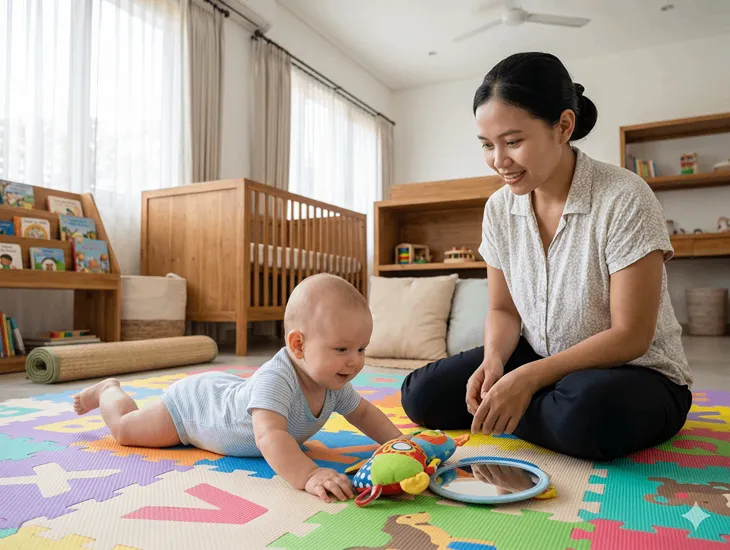
Skipping tummy time delays these necessary physical preparations significantly. Infants need dedicated floor time to practice lifting their heads. Consistent floor practice accelerates independent sitting capabilities remarkably.
Parents should encourage frequent rolling during morning play sessions. Placing colorful objects nearby motivates them to stretch their backs. These gentle movements activate critical stabilizing muscle groups effectively.
An experienced caregiver recognizes these critical preparatory skills. They guide your infant through targeted tummy time activities safely. Their expertise ensures your child develops necessary core strength securely.
Safe Floor Activities and Prop Sitting
Practicing upright postures requires a firm, safe surface exclusively. Place your infant on a dense play mat daily. Soft beds and couches present severe falling hazards for unstable babies.
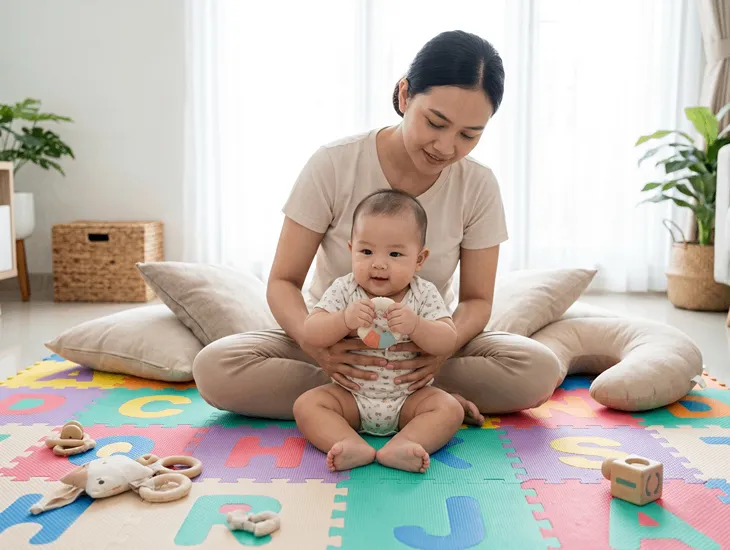
You can seat your infant securely between your spread legs. Let their back rest gently against your warm stomach. This supported position allows them to view the room confidently.
Prop sitting involves placing their hands firmly on the floor. This leaning posture teaches them how to distribute their weight. They gradually build the balance required for independent sitting.
You must stay extremely close during these practice sessions. Unstable infants will suddenly topple backward or sideways without warning. Adult supervision prevents painful bumps and frightening backward falls.
Limit prop sitting practice to short, five-minute intervals initially. Prolonged upright positioning exhausts their developing spinal muscles quickly. Frequent, brief practice yields the best physical results securely.
Professional caregivers integrate these supported postures into afternoon routines. They sit closely behind the infant during floor activities. This physical proximity guarantees absolute safety while they explore upright angles.
Building Balance with Reaching Games
Reaching games strengthen the lateral muscles required for steady sitting. Sit behind your infant and support their lower ribs gently. Place a soft toy slightly out of their reach.
Encourage them to stretch forward to grab the bright object. This movement forces them to shift their center of gravity. Shifting weight sideways builds incredible core stability naturally.
You should slowly move the toys further away over time. This gradual extension challenges their balance and coordination significantly. You must catch them quickly if they lose their footing.
Blowing bubbles offers another fantastic visual tracking exercise outdoors. Infants naturally twist their torsos to watch the floating bubbles. This gentle twisting activates opposite trunk muscles perfectly.
Pull-to-sit exercises help develop robust neck and back muscles. You gently pull the infant up by their hands carefully. They must actively tuck their chin to participate safely.
A professional helper utilizes these specific engaging games. They use colorful blocks to encourage safe lateral reaching. This structured play directly supports rapid physical development for your child.
Real Story: Conquering Milestones in Canggu
Watching his seven-month-old son slump sideways and smack his head on the play mat sent a spike of pure panic through Aldo’s chest. The constant fear of severe injury grew within their new villa in Canggu.
He hovered anxiously during every floor session in Canggu. Aldo felt a sharp ache of parental guilt watching his baby struggle to balance. His son clearly lacked the necessary core strength.
Running his design agency in Canggu left him entirely exhausted. He barely had the energy to conduct proper floor exercises. He urgently needed reliable assistance to support his son properly.
Knowing he needed help, Aldo sought out a childcare specialist in Canggu who understood infant motor development. He found a professional caregiver who immediately recognized the infant needed targeted muscle engagement.
She introduced a supervised prop sitting on a specialized firm mat at their home in Canggu. She played lateral reaching games using wooden blocks daily. Aldo watched her patiently guide his son back to the midline.
Within four weeks, his son sat up proudly and independently in Canggu. He reached for his favorite toy without toppling over once. Structured professional support transformed their daily routine in Indonesia beautifully.
Dangerous Equipment and Unsafe Practices
Achieving independent sitting requires avoiding common parental mistakes. You must never prop young babies up prematurely. Forcing an upright posture compromises their tiny, developing airways dangerously.
Using pillows to brace a wobbly baby is highly unsafe. Pillows easily slide away and pose severe suffocation risks. Infants can become trapped face-down in soft bedding instantly.
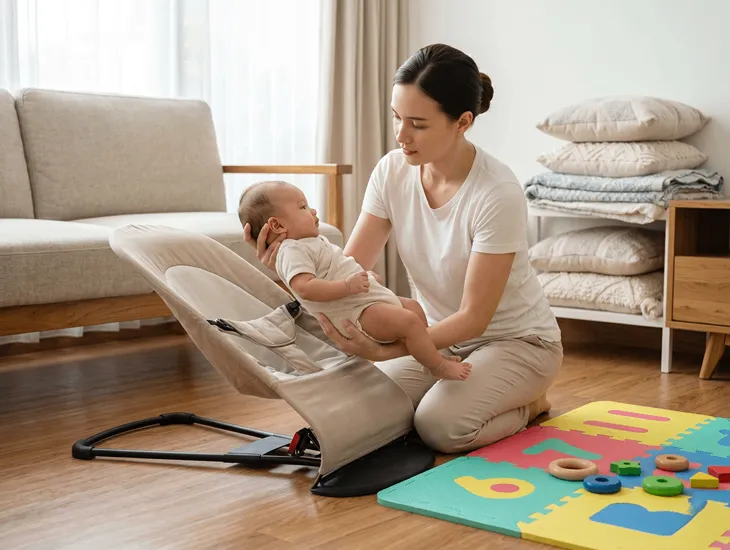
Many parents overuse commercial baby seats and bouncy chairs. These devices hold the infant rigidly without engaging core muscles. Extended time in containers hinders natural physical development significantly.
Infants need unrestricted floor time to explore their bodily mechanics. Seats prevent them from practicing crucial weight-shifting movements. Limit container use to brief, supervised moments during the day.
Never practice sitting exercises on elevated surfaces like dining tables. A sudden backward lunge leads to catastrophic falls quickly. You must perform all motor activities on the floor exclusively.
Our trained caregivers follow strict protocols regarding equipment usage. They prioritize safe, unrestricted floor play over electronic bouncers. Your infant receives the physical freedom necessary for healthy growth.
Red Flags for Baby Sitting Up Milestones
Monitoring baby sitting up milestones means recognizing potential warning signs. You should contact a doctor if neck control is absent. A four-month-old infant must hold their head steady.
Failure to roll over by six months requires clinical assessment. Pushing up with straight arms is a non-negotiable milestone. Missing these steps indicates a potential underlying physical issue.
Very stiff or excessively limp muscle tone warrants immediate attention. Healthy babies demonstrate a balanced, fluid resistance in their limbs. Rigidity or floppiness requires urgent pediatric evaluation locally.
If a nine-month-old cannot sit with any adult support, seek help. Independent sitting should manifest by twelve months. Early intervention provides the best possible outcome for delayed infants.
Parents must communicate openly with their healthcare providers regarding delays. Do not panic, but do not ignore consistent developmental red flags. Professional therapists can offer targeted physical interventions successfully.
A vigilant caregiver observes these specific motor patterns. They report any consistent physical stiffness directly to the parents. This clear communication ensures your child receives prompt medical attention.
How a Professional Caregiver Supports Growth
Foreign families face unique pressures raising infants abroad without help. A professional childcare provider offers immense daily relief securely. They bring specialized knowledge regarding infant postural development.
Agencies screen caregivers for extensive infant handling experience. They verify an understanding of international pediatric safety guidelines strictly. Your child receives care aligned with established modern medical standards.
Caregivers manage the difficult transition periods during awake windows. They smoothly shift from feeding to structured tummy time activities. This seamless routine prevents severe infant overtiredness and crankiness.
They know exactly how to challenge a baby safely. Caregivers introduce new reaching games only when the infant is ready. This paced approach prevents frustration and builds bodily confidence.
You can focus on your professional work without distraction. Knowing your infant is achieving crucial physical goals brings peace. Parents receive detailed daily reports on physical progress.
Investing in expert help benefits the entire household dynamic. Your child grows stronger under attentive, professional supervision. A dedicated childcare professional transforms early childhood development into a joyful experience.
FAQs about Baby Sitting Up Milestones
Q: When do babies typically sit up without support?
A: Most infants safely learn to sit independently between six and nine months of age.
Q: How can I help my baby learn to sit?
A: Provide plenty of supervised floor time and practice prop sitting with soft toys daily.
Q: Are commercial baby seats good for learning to sit?
A: No, excessive use of baby seats hinders natural core muscle development and essential balance.
Q: What are the red flags for delayed sitting?
A: Seek medical advice if your baby cannot sit with adult support by nine months of age.
Q: How does a caregiver assist with motor skills?
A: A trained caregiver incorporates reaching games and safe floor activities into your daily routines.

