
Review Us
Crawling Styles in Babies 2026 – unusual crawling patterns and normal mobility variations, calm babysitter support in Bali during active play
author

Crawling Styles in Babies: What Parents Need to Know

Expatriate parents often worry when their infant begins moving differently than expected. Observing unusual locomotion can trigger immediate anxiety about potential developmental delays. You might wonder if your child needs physical therapy quickly.

Watching a baby drag one leg across the floor causes significant parental stress. You constantly compare their progress to other infants in your local playgroup. This constant comparison destroys your peace of mind.

Without nearby family support, managing these developmental milestones feels isolating. You spend hours searching the internet for confusing pediatric mobility guidelines. This frantic research only increases your overall anxiety and daily exhaustion.

The Centers for Disease Control and Prevention confirms that infants develop mobility skills at their own unique pace. They emphasize that early intervention is necessary only if the child shows extreme stiffness or floppiness.

Understanding various infant crawling styles transforms how you view their physical progress. Recognizing normal mobility variations allows you to celebrate their newfound independence joyfully. You can finally relax and encourage their exploration confidently.

Hiring a trained babysitter in Bali provides vital supervision during these highly active phases. They actively support daily tummy time while you manage your remote work schedule. Your baby gains strength safely.

The Classic Hands and Knees Crawl

Most parents immediately picture the classic hands and knees method when discussing infant mobility. The baby balances evenly, moving the opposite arm and leg forward simultaneously. This coordinated movement builds core strength.

Many infants typically master this specific style between six and ten months old. However, it is not a rigid requirement for healthy physical development. Many children successfully skip this phase entirely.

Professional caregivers carefully monitor these early attempts at independent movement. They provide a safe, clear space for the infant to practice daily. This structured environment encourages the baby to build confidence slowly.

This traditional style requires significant upper body strength and balance. If your baby struggles to lift their tummy, they might adopt an alternative method first. Do not panic if they bypass this stage.

Recognizing normal mobility variations prevents unnecessary parental panic. Every infant discovers the most efficient way to navigate their immediate surroundings. Your primary goal is simply to encourage safe, active daily movement.

The Commando and Army Crawl Techniques

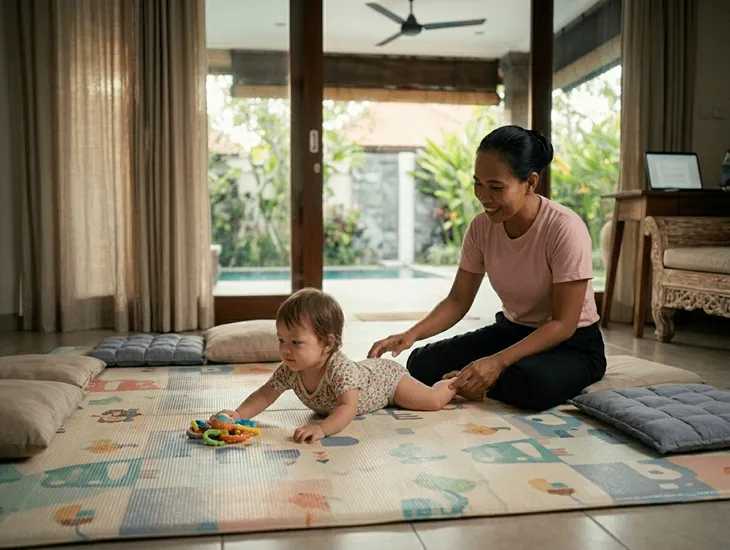
Crawling Styles in Babies 2026 – commando crawl on smooth tiles, tummy‑time shoulder strength, when to worry about asymmetric army crawling

The commando crawl usually appears when infants first figure out how to move forward. The baby stays entirely flat on their tummy while pulling with their arms. They use their legs to push.

This specific method is common on slippery surfaces like smooth villa tiles. It allows the infant to cover long distances before they develop sufficient core strength. It is a highly efficient mode of transport.

Qualified staff understand that tummy time directly supports this early mobility phase. They place engaging toys just out of reach to motivate the baby. This gentle encouragement builds the required shoulder strength.

Some babies prefer this method because it feels secure. They remain closer to the ground, which reduces their fear of falling. It is a perfectly acceptable stepping stone toward upright walking.

You should only worry if the baby consistently drags one side of their body. Asymmetry during an army crawl might indicate muscle weakness. Always consult a pediatrician if you notice persistent patterns.
The Bear Crawl and Bottom Shuffling Methods

The bear crawl looks exactly like it sounds, with the baby’s hips raised high. They move on their hands and feet, keeping their knees off the floor. This style is common on rough terrain.

Bottom shuffling involves the baby sitting upright and scooting forward on their bum. They usually use one hand behind them to propel their body forward. Bottom shufflers often resist traditional tummy time strongly.

Reliable assistance respects these unique preferences during daily floor play. They do not force a bottom shuffler into a hands-and-knees position. Instead, they provide safe, engaging environments for them to explore freely.

Bottom shuffling is highly efficient and allows the baby to carry toys easily. However, these infants often learn to pull themselves up to stand slightly later. This slight delay is normal for them.

Understanding these diverse Crawling Styles in Babies helps you track their progress accurately. The most important factor is their steady progression toward independent movement. How they choose to get across matters less.

Red Flags: When to Seek Professional Advice

While variations are normal, certain signs require immediate pediatric evaluation by a medical professional. If your baby is older than eleven months and shows no interest in moving, consult a doctor immediately.

You must seek help if the baby appears extremely floppy or unusually stiff constantly. Arching their back intensely and crying during floor time indicates physical discomfort. These symptoms fall outside the normal range.

Trained assistants document any loss of previously acquired motor skills. Regression in physical abilities is a major red flag that requires swift intervention. Prompt reporting allows parents to address potential neurological issues.

If the baby consistently uses only one side of their body, seek professional advice. Dragging one leg entirely or refusing to bear weight is concerning. This persistent asymmetry warrants a physical examination.

Trust your instincts if you feel something is genuinely wrong with their movement patterns. Caregivers provide valuable daily observations, but they cannot diagnose. Always rely on licensed pediatricians to assess motor concerns.

Real Story: Overcoming Mobility Anxiety in Sanur

Dion stood in his kitchen, staring through the glass doors at his eight-month-old daughter, Lily. She sat perfectly still on her bottom, ignoring the colorful wooden blocks just out of reach.

His jaw tightened as he remembered his neighbor’s baby, who was already pulling up to stand. The humid morning air felt thick. He had spent all night scrolling through forums about motor delays.

Dion needed to finish a project proposal, but the silence from the playroom felt like a failure. He hired an experienced local caregiver through our website to supervise her afternoon floor time.

The caregiver arrived and immediately sat on the floor, placing a noisy rattle just behind Lily’s hip. She didn’t force Lily onto her stomach. Instead, she modeled how to scoot and pivot.

By the time Dion finished his proposal, Lily was successfully shuffling across the mat to reach a teddy bear. The calm, expert guidance replaced Dion’s worry with a clear understanding of her progress.

How to Safely Support Floor Time at Home

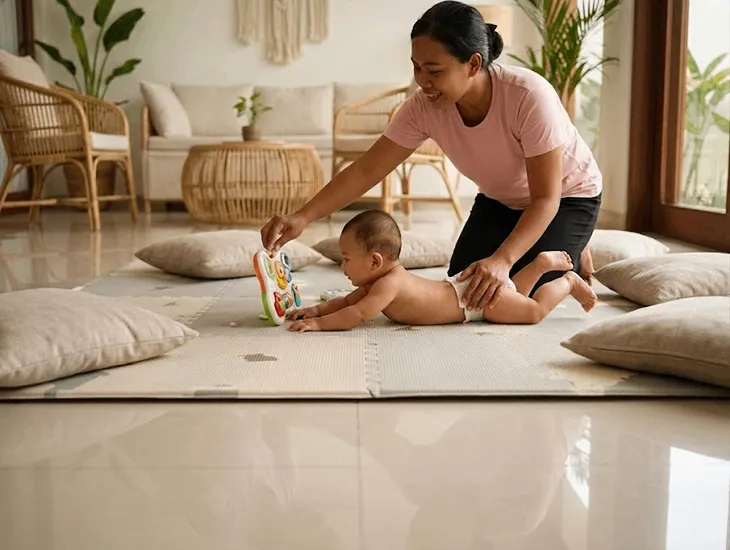
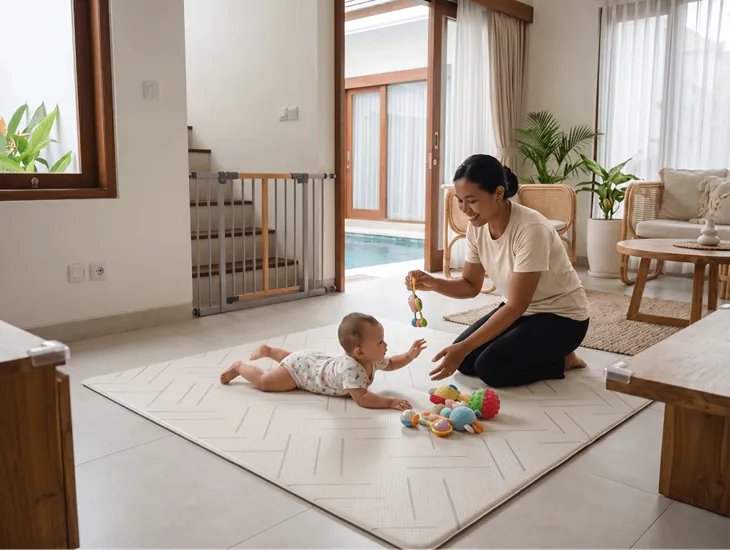
Crawling Styles in Babies 2026 – floor‑time safety and babyproofing, firm play surfaces and blocked hazards, calm supervised tummy time with engaging toys

Creating a safe environment is crucial once your baby begins to move independently. You must place them on a firm, clean surface several times every day. Avoid leaving them constrained to walkers.

Clear away small objects, electrical cords, and plastic bags from the floor area. You must securely block access to stairs, open balconies, and swimming pools. These physical barriers are non-negotiable safety requirements.

Expert childcare providers frequently get down to the infant’s eye level. This perspective helps them identify hidden hazards like sharp furniture corners or loose cables. Proactive management prevents serious accidents from occurring.

Start with very short periods of tummy time to build their physical endurance slowly. Roll the baby onto their back if they show signs of distress. You can always try again later.

Use gentle singing and brightly colored toys to keep floor time positive and engaging. Professional caregivers use these techniques to motivate reluctant infants. Consistent, supervised practice is the best way to support development.

Screening Caregivers for Infant Mobility Safety

Hiring domestic help requires asking specific questions about infant mobility and safety protocols. You must verify their experience handling active babies. Ask exactly how they support tummy time for reluctant infants.

Look for candidates who understand the importance of constant supervision near water hazards. Their response must highlight proactive safety measures rather than reactive panic. A thorough understanding of villa hazards is essential.

Vetted domestic staff remain calm and extremely patient during fussy transitional phases. They correctly view crying as a form of communication rather than misbehavior. This emotional maturity ensures your child receives gentle care.

Ensure the caregiver is willing to follow instructions provided by your pediatric physiotherapist strictly. They must execute prescribed physical exercises correctly during their scheduled shifts. This alignment guarantees your child receives support.

Proper vetting guarantees that your staff can manage a suddenly mobile infant safely. Their ability to recognize different movement styles ensures they provide appropriate encouragement. This expertise provides ultimate peace of mind.

Navigating Cultural Misunderstandings About Walkers

Cultural differences often influence how families approach early infant mobility and physical development. Some local traditions still heavily rely on the use of traditional plastic baby walkers. However, medical bodies caution against these.

Walkers pose severe fall risks and often delay the development of proper walking mechanics. They prevent the infant from building the necessary core strength required for balance. You must explicitly ban walkers.

An experienced local assistant adapts seamlessly to your specific modern parenting guidelines. They understand why international families prioritize unrestricted, supervised floor play over restraining devices. This professional adaptability ensures rules are enforced.

Well-meaning relatives might argue that the floor is too dirty for the baby. You must gently correct this misconception by emphasizing the importance of floor exploration. Providing a playmat easily resolves this conflict.

Clear communication prevents serious safety issues regarding infant mobility and disciplinary expectations. Providing written safety guidelines ensures everyone understands the boundaries. A unified approach guarantees your child explores their environment securely.

FAQs about Crawling Styles in Babies

Q: Is it normal if my baby skips crawling entirely? 

A: Yes, some healthy infants bypass this stage and move straight to pulling up and cruising.

Q: Why does my baby drag one leg when they move? 

A: Consistent asymmetry can indicate muscle weakness and requires a prompt pediatric evaluation.

Q: Are baby walkers safe to use in a villa?

A: No, medical experts advise against walkers due to significant fall and injury risks.

Q: How can a babysitter in Bali help my baby move?

A: A trained caregiver provides supervised, safe floor time and uses toys to encourage movement.

Q: What is a bottom shuffler?

A: It is an infant who scoots forward on their bottom instead of using hands and knees.

Q: When should I worry about my baby’s mobility?

A: Consult a doctor if an eleven-month-old shows no interest in moving or appears extremely stiff.

Need help managing Crawling Styles in Babies, Chat with our team on WhatsApp now!