
Teaching Kids About Cultural Diversity in Bali: Why It Matters for Growing Empathy
Vacationing with children often focuses entirely on relaxation and sunny beaches. Parents frequently overlook the profound learning opportunities that exist within the local traditions of Indonesia.
Many families see Bali only as a resort destination for leisure. They miss the deeper, transformative experiences that cultivate genuine global empathy in young, developing minds today.
Teaching Cultural Diversity in Bali helps your children understand the world beyond their home. It fosters a deep respect for traditions, rituals, and the unique daily life patterns here.
Empathetic children grow from seeing different customs firsthand. They learn that different ways of living are valid and important.
Parents often struggle to coordinate these deep cultural experiences while managing daily logistics. You want your children to learn, but planning educational outings takes massive amounts of your time.
A Babysitter in Bali transforms your trip into a powerful learning journey. You can read more about local customs in Indonesia to start planning your family trip today.
Table of Contents
Why Early Exposure Matters
Early childhood is the perfect time for introducing new concepts. Children naturally absorb information about their surroundings with incredible speed and deep curiosity during these formative years.
Research shows that local culture-based education effectively increases student understanding of global variety. Interacting with different traditions fosters tolerance and inclusivity.
Culture influences how children make sense of the world around them. When adults provide secure emotional connections, children can build a positive sense of their own identity.
This secure foundation supports their mental health and general well-being. It helps them view others with kindness instead of fear, which is vital for empathy.
By focusing on Cultural Diversity in Bali, parents prepare their kids for the future. They learn to value differences instead of viewing them as confusing.
Experiencing Canang Sari Traditions
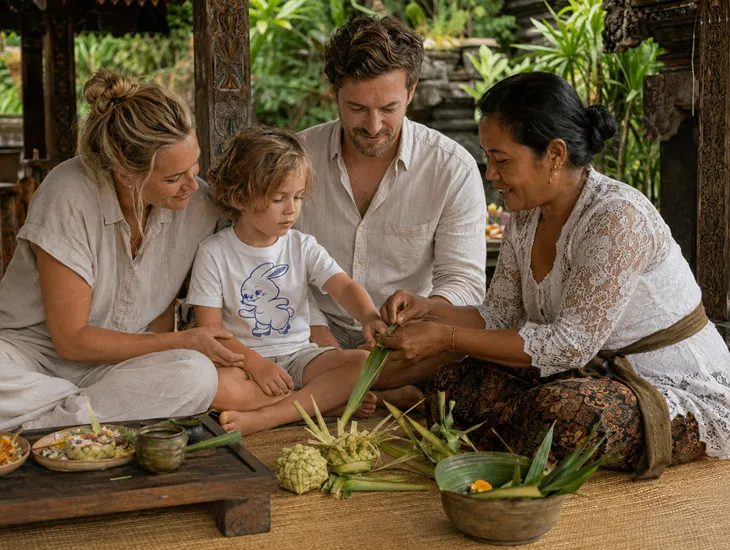
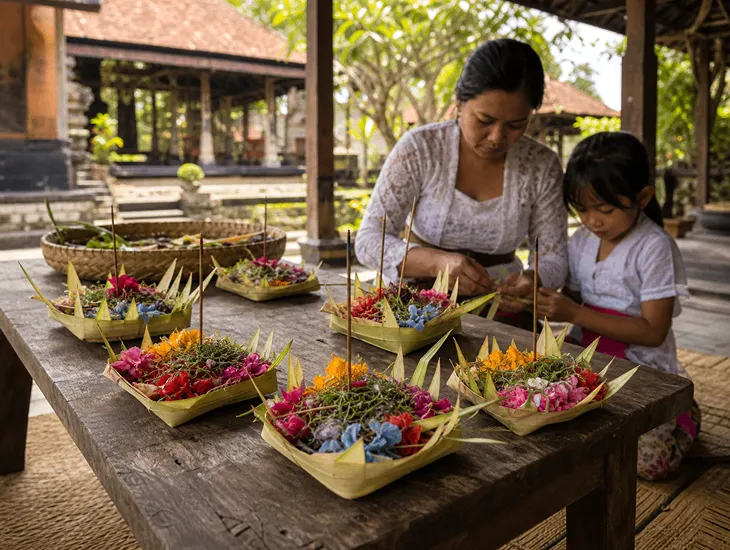
Balinese daily life revolves around beautiful, small offerings called canang sari. These are placed on the ground as a humble symbol of thankfulness and gratitude to specific Hindu deities.
Children can learn about the intricate process of creating these hampers. Each element holds deep meaning, from the vibrant flower petals to the palm leaves woven with great care.
Our professional caregivers explain the symbolism behind every colorful item. They teach children why specific flowers are placed in certain directions and what prayers accompany the offerings.
This activity helps develop fine motor skills through weaving and arranging petals. It transforms a simple decorative practice into a mindful act of devotion and cultural respect for all.
Witnessing this daily ritual teaches kids to appreciate the importance of gratitude. It shifts their focus from material possessions to the simple beauty found in everyday life practices, which is an essential lesson in Cultural Diversity in Bali.
Learning Through Balinese Dance
Balinese dance is a beautiful language that transcends words entirely. It integrates complex body movements, hand gestures, and expressive facial signals that tell ancient, mesmerizing stories of the island.
Children often find these graceful movements highly appealing to watch. Many local dance schools welcome young visitors to try the basic postures and gestures in a fun environment.
The dance requires significant flexibility and physical coordination. It teaches children discipline and patience as they strive to master each precise hand movement under the guidance of experts.
These dances often convey stories from ancient epics. When a caregiver explains the narrative behind the music, the child gains a deeper appreciation for the preservation of traditions.
This ancient art form is taught to children in Bali from a young age. It helps local children preserve their cultural identity and maintain a strong connection to their ancestors’ artistic heritage.
Engaging with Farm Life
Permaculture farms offer a fantastic space for hands-on, educational family adventures. Children learn that their food does not simply appear at a supermarket shelf, but comes from the earth.
They can enjoy collecting duck eggs or feeding animals throughout the day. This provides a reality check on the effort required to produce fresh, healthy food for everyone.
These experiences are highly educational for children. They gain a direct feel for the daily rhythm of life in a village environment, which differs greatly from urban living.
A dedicated Babysitter in Bali can accompany your family to these farms. They act as a translator, helping your children interact safely with farmers and animals during the educational farm tour.
Understanding the cycle of farming builds a healthy respect for nature. Children learn to value sustainability, organic practices, and the hard work that farmers contribute to the community.
The Role of a Babysitter in Bali
Wei, a Chinese architect, sat at his desk in Pererenan, trying to finish a proposal. The humid afternoon heat made his five-year-old daughter, Mei, restless and prone to constant interruptions.
He struggled to focus as she grabbed his pens and tugged at his arm during client calls. The constant frustration made him feel like he was losing his patience entirely.
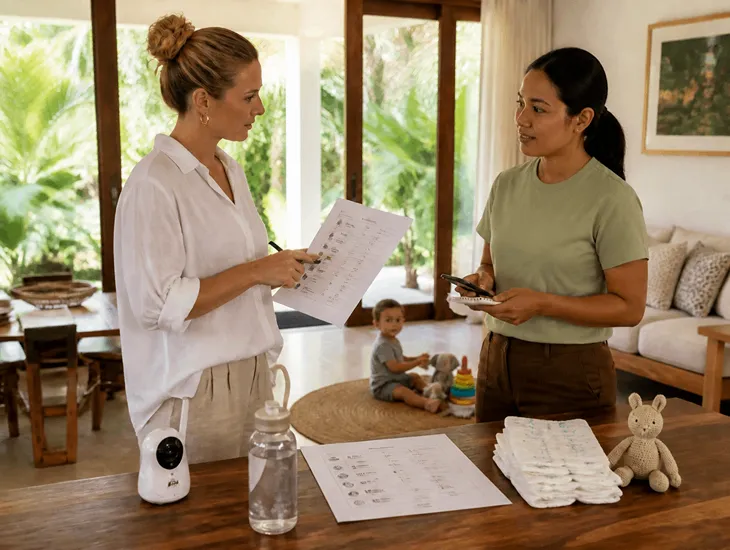
He contacted our agency to bring in a professional Babysitter in Indonesia. The caregiver arrived, greeted Mei with a warm smile, and immediately suggested they read stories in the garden.
The assistant used gentle role-play games to teach Mei Basic Etiquette for Children, specifically how to wait patiently while daddy worked. She made the process feel like an exciting game.
Wei finally finished his report, feeling a wave of relief as he heard them giggling outside. He realized that bringing in expert help was the turning point he desperately needed.
Real Story: Bridging Worlds in Ubud
The air in Canggu hung heavy, sticky with humidity. Six-year-old Emily gripped her mother Sarah’s hand, her face flushed red. The relentless roar of motorbikes outside the villa made the space feel more like a chaotic construction site than a sanctuary.
Sarah felt frayed. Emily was sobbing, her sleep cycle shattered by the long flight from Melbourne. She had tried hiring two local helpers to watch Emily while she attended board meetings, but both canceled minutes before their shifts.
Sarah paced the villa, her anxiety spiking. She feared she would have to abandon her meetings. That was when she found a local professional service. They matched her with a caregiver who arrived within forty minutes.
The caregiver didn’t force Emily to engage. She sat on the floor, quietly weaving a palm leaf into a small bird. Emily eventually stopped crying, drawn in by the rhythmic sound of the weaving.
By the time Sarah finished her calls, Emily was laughing, mimicking the caregiver’s hand gestures. Sarah realized then that professional help was the bridge she needed to keep her family’s peace and sanity.
Collaborating with Local Experts
Independent hiring often lacks the safety and security that your family truly deserves. You cannot easily verify the background or professional experience of random candidates found on social media.
Professional agencies eliminate this dangerous guesswork through rigorous, multi-step screening processes. They conduct thorough interviews, check medical records, and verify past employment references for you.
Reputable agencies provide ongoing support for both the parents and the caregiver. They ensure that everyone understands the service expectations and follows modern safety standards for your kids.
If your scheduled caregiver becomes unexpectedly ill, agencies offer immediate replacements. This crucial safety net prevents sudden scheduling disasters during your expensive tropical holiday in the beautiful island of Indonesia.
Collaborating with these experts allows you to focus on the joy of discovery. You can trust that your chosen Babysitter in Bali understands your specific international childcare service requirements.
Long-Term Educational Benefits
Exposure to diversity reduces the formation of stereotypes from an early age. It helps children understand that there are many valid ways to live, worship, and express their beliefs.
Early interactions with different customs provide a foundation for adult tolerance. Children learn that “different” does not mean “wrong,” which is a vital lesson for their future social development.
This awareness helps them become more compassionate global citizens. They learn to listen, observe, and ask respectful questions rather than making assumptions based on their own limited experiences.
Research confirms that Cultural Diversity in Bali education leads to measurable improvements in empathy. Children become more aware of their impact on others and the importance of helping.
By investing in this education now, you equip your children with essential life skills. They learn to navigate the world with an open heart and a truly curious mind.
FAQs about Cultural Diversity in Bali
Q: How early should children start cultural activities?
A: Children as young as four can start observing and participating in simple cultural rituals.
Q: Will my child understand cultural lessons?
A: Yes, children are highly observant and learn quickly through imitation and gentle explanations.
Q: How does a Babysitter in Bali help with education?
A: They provide context, translate traditions, and model respectful behavior for your children.
Q: Are cultural activities safe for young kids?
A: Most activities like dance or farm visits are very safe when supervised by experts.
Q: What if my child is shy?
A: An experienced caregiver knows how to gently encourage shy children to participate comfortably.

