
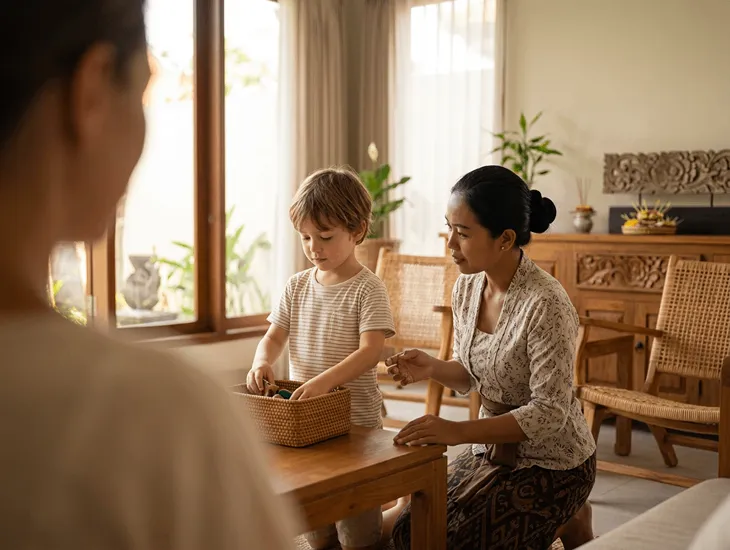
How 7 Positive Character in Bali Habits Shape Kids Daily
Raising children abroad is never simple. Expat parents in Bali often wonder whether their kids are truly absorbing the right values — or just absorbing screen time.
The environment matters enormously. Research consistently shows that daily micro-habits, not grand lessons, are what build lasting character traits in children aged two to twelve.
Bali offers a rare advantage: a culture rich in ritual, community, and visible respect. Children here witness ceremony, cooperation, and gratitude every single day.
Yet many foreign families miss these opportunities. Without intentional structure, the tropical lifestyle can drift toward passive screen time and disconnected routines.
That is where the science of character development meets the wisdom of Balinese daily life. According to a study about guidance on early childhood development, consistency and cultural belonging are two of the strongest predictors of resilience in children.
This guide breaks down the seven evidence-backed daily habits that shape positive character in Bali — practical enough to start tonight, and culturally grounded enough to last a lifetime.
Table of Contents
Routine Responsibility Through Small Daily Chores
Giving children small, repeatable tasks tells them they matter. Tidying toys, watering plants, or setting the table builds self-control, focus, and a genuine sense of contribution.
In Bali, caregivers often link chores to cultural tasks. Helping fold banana leaves for offerings or removing shoes before entering a room teaches responsibility inside a living tradition.
Research from Indonesian child psychology journals confirms that children given regular household duties develop stronger executive function and emotional regulation by age seven.
Respectful Communication Modeled by Adults

Children do not learn respect from lectures. They absorb it by watching how adults speak to drivers, staff, neighbors, and strangers in everyday moments around them.
When parents use polite language consistently — apologizing sincerely, avoiding harsh shaming — children copy that pattern. Empathy becomes a reflex, not a rule.
In households with nannies in Bali, the quality of adult-to-adult communication becomes a continuous character classroom for watching children.
Predictable Routines: Sleep, Meals, and Learning
Stable schedules reduce behavioral problems in children under ten. When bedtime, mealtimes, and homework follow a reliable rhythm, the nervous system settles and focus improves noticeably.
Expat families in Bali who balance beach time with structured “quiet hours” and study routines report noticeably better self-discipline in their children within six weeks. Predictability is not rigidity — it is the foundation on which curiosity and resilience grow safely.
Limited, Guided Screen Time in Bali
Clear boundaries around gadgets are one of the most powerful levers parents hold. Unstructured, unlimited screen time erodes attention span, social skills, and sleep quality in children.
The key word is guided. Co-viewing a show and then discussing the characters’ choices — “Was that kind? What would you have done?” — turns passive watching into daily character coaching. This habit builds positive character in Bali households more reliably than any single punishment or restriction alone.
Real Story: How One Expat Family Found Balance in Pererenan
Meet Mia Hartmann, a 38-year-old digital nomad from Berlin who relocated to Pererenan with her seven-year-old son, Felix, in early 2024. The first three months felt like survival mode. Felix had no school friends yet, Mia worked remotely until 6 p.m., and their evenings dissolved entirely into tablet time under the ceiling fan.
“I noticed Felix becoming irritable and withdrawn,” Mia recalls. “He wasn’t adjusting — he was just numbing out.” The humidity, the unfamiliar gamelan sounds drifting from the banjar each evening, the lack of structure — it had all piled up quietly.
A friend recommended she contact a local nanny placement service to find a full-time nanny in Bali who understood both expat family needs and Balinese cultural norms. She was matched with Wayan, a Gianyar-born caregiver with a background in early childhood education.
Within weeks, Wayan introduced structured afternoon routines — a snack, thirty minutes of Bahasa Indonesia practice, then outdoor play before dinner. She showed Felix how to prepare canang sari offerings alongside the family next door and used effort-based praise naturally: “You tried again — that is what matters most.”
By month three, Felix was sleeping through the night, initiating chores without reminders, and asking curious questions about Nyepi. The change was not magic — it was consistency, cultural belonging, and a caregiver who understood both worlds completely.
Everyday Empathy and Acts of Helping
Kindness is a skill, and like all skills it needs daily practice. Involving children in small service acts — sharing snacks, helping younger siblings, joining a beach clean-up — trains empathy consistently.
Bali’s calendar of community ceremonies offers expat families rare, organic opportunities. When children participate in gotong royong or watch neighbors prepare temple offerings together, they experience social responsibility in action.
Character development in Bali happens most naturally in these lived, communal moments rather than in any structured classroom lesson.
Effort-Based Praise Over Result-Based Praise in Bali

“You worked so hard on that” builds something “You’re so smart” cannot: genuine resilience. Praising effort directly teaches children that struggle is part of growth, not evidence of failure.
In expat households where children navigate language learning, school transitions, and new friendships, effort-focused encouragement becomes a daily anchor.
Parents who highlight persistence — not outcomes — raise children who handle setbacks with curiosity instead of shame. For nannies supporting positive character in Bali homes, this single language shift creates measurable, lasting results.
How Nannies and Caregivers Reinforce These Habits
Seven habits are only as effective as the people modeling them consistently. For working expat parents, a skilled caregiver becomes the daily architect of character routines between school and bedtime.
The best nannies in Bali do more than supervise — they reinforce routines, apply effort-based language, involve children in cultural moments, and model respectful communication with everyone in the household. Families who invest in properly vetted, culturally fluent caregivers report that positive character in Bali habits introduced at home stay consistent even during long remote-work days.
When hiring, prioritize caregivers with documented experience in age-appropriate activities, clear English communication, and familiarity with both Balinese customs and international family norms. Background checks, reference calls, and a structured trial period are non-negotiable standards for professional childcare in Bali.
FAQs about Positive Character Development in Bali
Q: What age should I start building positive character habits in Bali?
A: Start from birth; consistency before age 5 has the greatest long-term impact.
Q: Can a nanny in Bali really reinforce these habits daily?
A: Yes — a trained caregiver applies routines and praise language consistently.
Q: How do I explain Balinese ceremonies to young expat children?
A: Use simple language: “We’re being respectful guests in their special moment.”
Q: Is screen time guidance different for expat kids in Bali?
A: Same science applies; co-viewing and discussion matter more than total minutes.
Q: How do I find a nanny in Bali who understands character development?
A: Look for caregivers with early childhood training and ask about their praise style.
Q: What is the biggest mistake expat parents make with routines in Bali?
A: Letting the relaxed lifestyle replace structure entirely — balance is everything.