
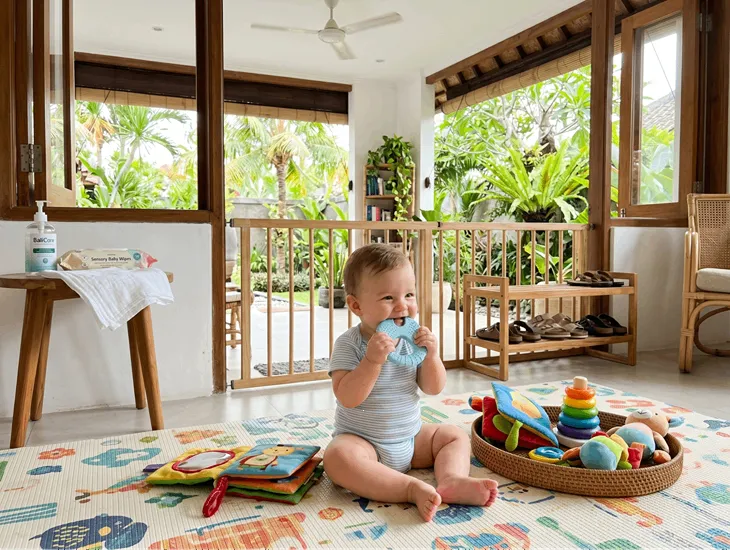
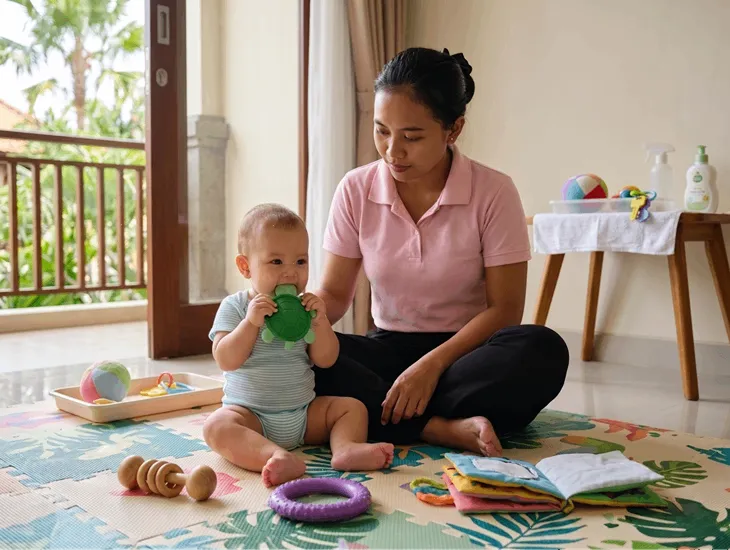
Understanding Baby Mouthing Behavior in Bali for New Parents
Foreign parents in Indonesia often feel overwhelmed when infants mouth objects. This exploration is a normal milestone. However, it causes hygiene concerns in tropical environments like Bali. Maintaining high standards is difficult.
The warm climate increases bacterial risks on damp surfaces. Parents struggle to balance exploration with the risk of gastric distress. Small objects like pebbles pose constant choking hazards. This requires vigilant environmental monitoring.
This turns a relaxing stay into constant anxiety. Monitoring is difficult for digital nomads. Managing a startup while watching every move is an exhausting and complex challenge. Parents need professional assistance daily.
Without professional help, maintaining sterilized environments in public is hard. Mismanaging this phase leads to illness or restrictions. This can hinder natural development and cause intense burnout. Proper guidance reduces these risks.
Accessing resources from the Ministry of Health in Indonesia helps parents maintain sanitation standards. These guidelines provide the foundation for keeping infants safe during their critical sensory phases. Expert caregivers implement these.
Finding an expert who understands Baby Mouthing Behavior in Bali is the primary solution. A trained babysitter manages hygiene and safety, allowing parents to focus on work while children explore. This ensures stability.
Table of Contents
Developmental Role of Oral Exploration
Infants use their mouths to learn about object properties like shape and texture. This behavior is an essential part of early cognitive development. Babies learn to use multiple senses at once. This supports learning.
Oral sensations create a functional understanding of the child’s surroundings. This phase is a sign of healthy curiosity. Babies investigate everything using their sensitive mouths. It is an effective way to learn about objects.
Stopping all exploration can hinder learning. Parents should focus on making the environment safe. Supporting this natural instinct requires a balance between freedom and strict supervision in a new environment. Professional oversight is required.
Babies gather data about density and temperature through their mouths. A trained partner encourages this curiosity while ensuring objects are clean. This interaction supports the brain’s ability to process sensory input. This builds cognition.
Implementing these developmental supports correctly requires patience. A babysitter understands that oral exploration is a milestone to be managed, not a habit to be broken. This perspective fosters a healthy learning environment at home.
Age Range for Normal Mouthing Phases
Oral exploration typically begins around four months of age. It peaks between six and nine months as coordination improves. Most children outgrow this habit by age two in most cases. This timeline is standard.
Finger mouthing is normal during this phase and prepares infants for solid food textures. While most children stop by their second year, some continue into their third. This is developmentally appropriate for many infants.
If the habit persists beyond age four, it may affect dental health. Understanding these oral habits helps identify developmental delays. Parents should not worry if a one-year-old still puts toys in their mouth.
Teething often increases the urge to mouth objects. Babies seek pressure to soothe their gums. Providing chilled, clean teethers manages this phase safely. Consistent monitoring ensures the behavior remains within a normal range.
Maintaining a watchful eye during these transitions is critical. A babysitter monitors changes in intensity. This data helps parents understand where their child is in the developmental cycle. Accurate tracking ensures peace of mind.
Benefits of Mouthing for Sensory Growth
Mouthing supports sensory integration and emotional self-regulation. It provides a calming effect. This behavior helps infants manage their energy levels in stimulating environments. Our staff helps facilitate these moments of quiet exploration.
The process also assists with early speech development. Exploring different shapes helps infants experiment with consonant sounds. This oral play is the foundation for later language skills and successful communication. It is highly beneficial.
Infants learn about what objects can do through active investigation. Studies show infants can visually recognize shapes they previously explored with their mouths. This cross-modal learning is vital for cognitive advancement and processing.
Encouraging safe exploration builds confidence. A professional facilitates this by providing a curated selection of toys. Oral stimulation also prepares the mouth for eating solids and desensitizes the gag reflex. This supports dietary transitions.
This phase allows babies to self-soothe when overwhelmed. A babysitter recognizes when the child needs a clean teether to calm down. This proactive management reduces overstimulation in the bright tropical environment of Indonesia.
Hygiene Risks in the Tropical Climate
The humid climate in Indonesia accelerates bacterial growth on damp surfaces. Caregivers must stay vigilant. Infants cannot distinguish between a clean toy and a contaminated floor. Pathogens lead to digestive issues. Vigilance is mandatory.
Ensuring every item within reach is sanitized is a full-time task. Healthy Baby Mouthing Behavior in Bali requires professional hygiene management. Babies mouth their hands repeatedly, necessitating constant washing to prevent bacteria ingestion.
Insects can leave droppings on surfaces in open-plan villas. Regular cleaning of the play area is mandatory. Professional partners maintain strict protocols for every child. We train staff to be proactive about sanitation.
Damp surfaces near the pool or garden are particularly high-risk. A dedicated babysitter ensures these areas stay clean. This detailed attention to hygiene protects the infant’s health during daily outdoor play and exploration.
Daily sterilization of pacifiers and teething rings is non-negotiable. Our team implements a rigorous sanitation schedule. This protects the child from environmental pathogens that thrive in the heat. Cleanliness is the primary safety guard.
Choking Prevention and Villa Safety
Infants under three years old lack the dental maturity to chew hard objects. Small items like coins, batteries, or decorative pebbles are major hazards. Safety guidelines recommend keeping all small objects out of reach.
Caregivers must avoid offering high-risk foods like whole grapes or raw carrots. Constant supervision is mandatory during the oral phase. Villa environments often feature small decorative items that look like toys. Vigilance is essential.
A trained partner audits the play area to remove these risks. They ensure infants explore without encountering avoidable hazards. Choking happens silently. A partner must never leave a child unattended during play sessions.
Our staff understands first aid and the risks of small objects. Magnetic toys and button batteries must stay in locked cabinets. Prevention is the priority in every tropical villa and hotel room environment.
Small garden stones often find their way indoors. A babysitter performs regular sweeps of the floor to locate these items. Removing these physical risks ensures the infant can crawl and explore without immediate danger.
Real Story: Managing Oral Exploration in Pererenan
Akira identified a major safety risk when his daughter began mouthing villa decor. He struggled to manage his startup while his infant reached for garden pebbles and dusty floor tiles in their open-plan home.
He felt overwhelmed trying to keep her safe from bacteria while working. Akira worried about the risk of infections. He hired a safety-trained caregiver to manage his daughter’s oral exploration in Pererenan.
The caregiver sterilized every fallen object and monitored hand hygiene. Akira found the time to focus on his business. His daughter remained healthy and free to explore under the watchful eye of a professional.
This partnership allowed the family to thrive during their island transition. The babysitter’s meticulous attention to the villa’s unique layout prevented several potential choking incidents. Akira successfully stabilized his professional schedule. This success continued.
He noted that having a professional caregiver allowed him to separate his fatherhood duties from his CEO role. The babysitter’s expertise in managing Baby Mouthing Behavior in Bali gave him total confidence in the setup.
Practical Rules for Safe Exploration
Allow mouthing of appropriate items like clean teethers. Always wash items that fall on the floor before returning them. Avoid letting infants’ mouths tap water. Use bottled or boiled water for oral hygiene.
This precaution is essential for preventing gastric distress. Brief your caregiver on rules for pacifier use and hand hygiene. Ensure they understand the difference between healthy exploration and hazardous objects. Use clear instructions.
A trained partner follows these checklists to maintain safety. Model good hygiene by washing your own hands frequently. Babies learn by observing adults. Consistent habits reduce the transfer of bacteria during daily play.
Check toys regularly for loose parts. Create a separate bucket for dirty toys to prevent mixing with sanitized items. This organizational system keeps the environment safe for your child’s constant sensory needs and exploration.
Establish a “one toy at a time” rule in public spaces. This makes it easier for the babysitter to monitor what enters the child’s mouth. Managing the volume of items reduces the risk of error.
Identifying Developmental Red Flags
A lack of mouthing in early months may signal a developmental concern. Conversely, persistent mouthing of dirt or paint might indicate sensory issues. Our partners monitor Baby Mouthing Behavior in Bali for patterns.
This allows for early consultation with a qualified pediatrician. Consistent thumb-sucking beyond age four is another potential concern. Early detection allows for gentle intervention. A professional caregiver supports development while keeping parents informed.
Extreme sensitivity to objects in the mouth is also a red flag. This can affect future feeding success. Monitoring these habits helps identify sensitivities early. We provide a watchful eye on all developmental phases.
Our babysitters provide detailed reports to parents. This transparency ensures that any deviations are caught early. Your child’s growth stays on track while you handle your professional commitments with complete peace of mind.
If a child stops mouthing abruptly before the expected age, it should be noted. This could indicate a change in sensory comfort. Our staff documents these shifts to help parents provide the best support.
FAQs about Baby Mouthing Behavior in Bali
Q: Is mouthing normal for my baby?
A: Yes. It is a healthy part of sensory exploration for children under three years old.
Q: How do I keep toys clean?
A: Sterilize toys with bottled water whenever they touch the floor or public surfaces in Bali.
Q: What are the choking hazards?
A: Anything smaller than a coin, including pebbles, batteries, and small decorative villa items.
Q: Should I stop my baby’s mouthing?
A: No. Provide safe, sanitized objects instead of allowing the exploration of hazardous or dirty items.
Q: How can I manage Baby Mouthing Behavior in Bali at the beach?
A: Always supervise closely and wash hands frequently to prevent the ingestion of sand and bacteria.
Q: When does mouthing naturally stop?
A: Most children naturally reduce this behavior between eighteen months and two years of age.

![Safety Rules in Bali] 2026 – Choking first aid, villa safety checks, and hygiene for toddlers](https://bali-nanny.com/wp-content/uploads/2026/05/33-4-3_15_11zon_7_11zon.webp)