

Review Us
Fever Care for Children in Bali 2026 – Pediatric protocols, safe dengue monitoring, and care
author

Safe Fever Care for Children in Bali with Babysitter Support

When a child’s temperature spikes, foreign parents in Indonesia experience immediate anxiety. Navigating pediatric healthcare in a new country while managing professional responsibilities is a significant operational challenge for expatriates.

Tropical diseases, particularly dengue fever, add complexity to childhood illnesses. The rapid onset of symptoms requires strict monitoring that many working parents struggle to maintain during their busy work schedules.

Without constant supervision, critical warning signs can be missed easily. A sudden drop in temperature is often misinterpreted as recovery when it might actually signal a highly dangerous infection phase.

Managing hydration and tracking medication schedules accurately demands full attention. Relying on untrained household help to monitor a sick child presents significant medical risks and completely disrupts parental focus.

The Indonesian Paediatric Society provides clear rules for home observation and urgent medical escalation. Implementing these guidelines requires dedicated, knowledgeable support to ensure the child’s safety consistently every day.

Securing professional Fever Care for Children in Bali solves this problem. A vetted babysitter supports your family by meticulously executing the medical plan while you successfully manage your remote work.

Pediatric Fever Guidelines

The Indonesian Paediatric Society defines a fever as an elevated body temperature. Most childhood fevers are viral and self-limiting, requiring careful observation rather than immediate panic from worried parents.

IDAI advises home observation for common viruses. Infants with any fever require immediate medical evaluation. Professional assessment is non-negotiable for this highly vulnerable infant age group.

For toddlers, a persistent fever requires a doctor’s visit. A high temperature mandates clinical review to rule out severe bacterial infections quickly.

At any age, an extreme temperature is a strict emergency. Recurrent fevers lasting multiple days or fevers accompanied by a rash require urgent pediatric assessment to determine exact causes.

Children with chronic illnesses must be seen by a doctor promptly. Fevers can destabilize their baseline health quickly, making early intervention critical for their physical safety and overall recovery.

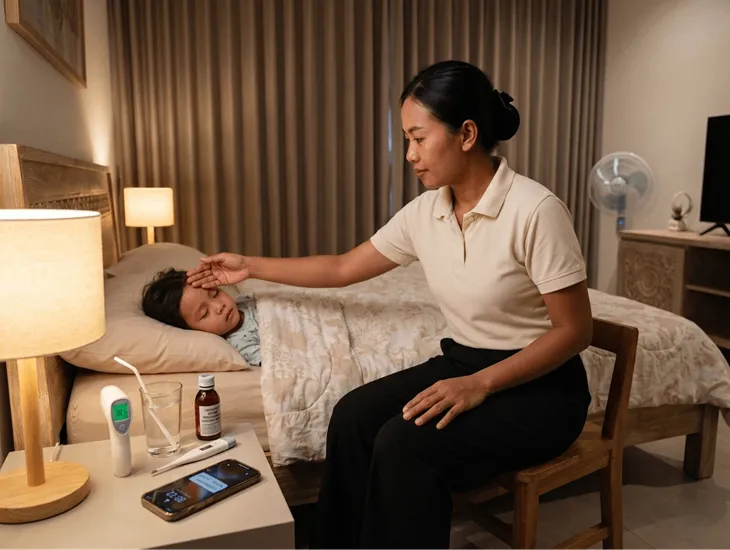
A professional babysitter supports parents by tracking specific timelines. They ensure IDAI escalation rules are followed meticulously. This vigilant observation forms the foundation of safe pediatric fever management.

Professional caregivers also ensure that the child’s resting environment remains calm and conducive to recovery. Reducing external stimulation helps the child conserve the energy needed to fight off viral infections.

Dengue Risks in Indonesia

Dengue Fever Care in Bali 2026 – Symptom tracking, hydration management, medical escalation

Indonesia is a dengue-endemic region. Local experts note young children are vulnerable to severe dengue infections. Any persistent fever should trigger a clinical blood test immediately.

Dengue fever presents unique challenges because the most dangerous phase occurs when the fever drops. Plasma leakage can cause sudden shock if left unmonitored during this critical window.

Caregivers must watch for specific warning signs of severe dengue. Bleeding from the gums or nose requires immediate emergency room care. Blood in vomit or stool is a critical symptom.

A sudden drop in temperature accompanied by cold, clammy skin is another danger sign. Restlessness, extreme lethargy, or persistent vomiting indicate the child requires immediate intravenous fluids at a hospital.

A trained babysitter treats dengue as a differential diagnosis for any fever. They understand that a dropping temperature does not mean recovery. This specific local knowledge is essential for safety.

Implementing proper illness management means utilizing mosquito nets and age-appropriate repellents around the sick child. Preventing further mosquito bites protects the rest of the household effectively.

Ensuring the child rests under an intact mosquito net is a standard precaution. This simple but effective barrier protects the recovering infant from secondary bites during their vulnerable healing phase.
At-Home Temperature Management

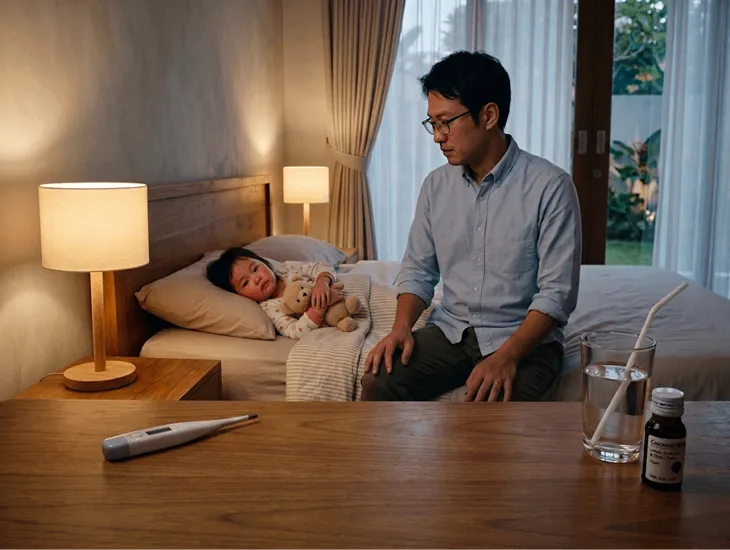
Accurate measurement is the first step in fever management. Caregivers must use a reliable thermometer. Tracking the exact temperature, day count, and medication timing is extremely vital for safety.

IDAI emphasizes watching the child’s general condition alongside thermometer readings. Alertness, willingness to drink, and urine frequency are critical indicators of the child’s overall health and hydration status.

Comfort measures are essential. Keep the child’s clothing light to allow heat to escape. Use tepid sponging if uncomfortable. Avoid over-bundling them in the tropical heat of the island.

Offering frequent, small amounts of safe fluids prevents dehydration. Use bottled water or oral rehydration salts as directed by a doctor. Dehydration is a severe complication of dengue infections.

Administer paracetamol based strictly on the child’s weight and doctor’s prescription. IDAI cautions against using ibuprofen if dengue is suspected, as it can increase the risk of dangerous bleeding complications.

A vetted babysitter excels at managing these details. They maintain a detailed log of fluids and temperatures. This precision ensures your child receives optimal at-home temperature management.

A clear communication protocol between the caregiver and parents guarantees that no detail is missed. This transparency builds trust and ensures the medical plan is executed flawlessly every single time.

Emergency Red-Flag Symptoms

Knowing when to escalate care is critical. A child requires immediate hospital evaluation if it is difficult to wake or not interacting normally. Extreme lethargy is a serious neurological warning.

Breathing difficulty or fast breathing indicates a severe problem. If a child develops blue lips, tongue, or nails, they need emergency oxygen. These signs point to systemic distress requiring intervention.

Caregivers carefully observe the child’s breathing patterns while they sleep. Rapid, shallow breaths or grunting sounds indicate severe respiratory distress that requires immediate emergency evaluation at a pediatric clinic.

Neck stiffness or a bulging fontanelle in infants are classic signs of meningitis. These symptoms require immediate emergency room assessment. Parents should never delay seeking care if these appear.

Signs of severe dehydration require clinical support. If a child has a dry mouth, sunken eyes, or produces very little urine, they need intravenous fluids. Prompt action prevents organ damage.

Any sign of bleeding, including petechiae, mandates immediate hospital care in a dengue-endemic region. These small red spots indicate platelet issues that require rapid medical management and clinical oversight.

Our babysitters are trained to recognize these red flags immediately. They contact parents and emergency services without hesitation. They do not adopt a delayed approach when danger signs appear.

Coordinating with Medical Clinics

Expatriate parents utilize well-known medical facilities for pediatric emergencies. BIMC Hospital in Kuta offers continuous emergency room access and pediatric care. It is a reliable option for severe illness.

Siloam Hospital is another frequently recommended facility for pediatric services. Knowing the location of these major hospitals in advance reduces panic during a sudden medical crisis involving a sick child.

For urgent assessments and initial dengue blood tests, clinics like SOS Medika in Seminyak are excellent. Ubud Care Clinic provides similar services for families residing away from the main hospitals.

Having a clear escalation plan is vital. A professional agency helps establish this workflow before you need it. The babysitter follows your established emergency protocols exactly regarding preferred local clinics.

If a child spikes a fever while parents are working, the babysitter knows who to call. They coordinate transport to the pre-approved clinic once parental authorization is securely obtained.

Familiarity with local traffic patterns allows the babysitter to calculate travel times to the hospital accurately. This logistical awareness prevents dangerous delays during a severe pediatric medical emergency.

This structured coordination is a crucial component of safe pediatric care. It ensures medical intervention is seamless, rapid, and aligned with the parents’ specific healthcare preferences.

Real Story: Illness in Seminyak

Pediatric Support in Bali 2026 – Medical escort, symptom tracking, and safe sick child care

Hiroshi, an expatriate from Tokyo, identified a medical management deficit shortly after relocating to Seminyak. His toddler developed a high fever that disrupted his remote work schedule. He required immediate support.

He struggled to monitor her temperature accurately while balancing startup meetings. His informally hired helper lacked the training to track hydration or recognize dengue warning signs, causing Hiroshi significant anxiety.

Hiroshi hired a first-aid certified caregiver to implement strict symptom tracking. She created a detailed log of fluids, temperature, and medication times, strictly following the local pediatrician’s specific written orders.

When the fever persisted, the caregiver alerted Hiroshi. She coordinated transport to SOS Medika for a dengue test. Her prompt action ensured the toddler received timely evaluation.

The child was diagnosed with a common virus, not dengue. Hiroshi successfully focused on his business meetings while his daughter recovered. This intervention stabilized his family’s chaotic week entirely.

Hiroshi noted that having a trained professional manage his daughter’s illness was invaluable. It allowed him to act as a parent rather than an overwhelmed medical administrator.

Safety Standards for Caregivers

Reputable agencies highlight advanced First Aid and CPR training for their staff. This training is refreshed annually and includes emergency protocols. These standards ensure caregivers handle sudden medical crises.

Thorough vetting includes verified police checks and extensive childcare experience. Professionals often have years of experience managing childhood illnesses. This background provides them with the calm competence parents require daily.

Agencies provide written emergency Standard Operating Procedures. Management can step in to coordinate hospital visits if a child suddenly becomes severely ill. This logistical support is crucial for foreign families.

Swimming competence is also verified. This is relevant because a feverish child might wander near a villa pool while parents are distracted. Water safety remains a priority during illness periods.

By benchmarking against these high standards, parents ensure their child receives optimal care. A vetted professional understands the unique health risks of the island and acts decisively when needed.

Providing excellent care requires more than just kindness. It demands technical knowledge, verified experience, and a strict adherence to established safety and medical protocols locally.

Division of Medical Roles

A clear division of responsibilities ensures safe care. Sitters monitor temperature, hydration, and pain levels. They report changes to the parents quickly, acting as an observant extension of the family.

They apply comfort measures like tepid sponging and encourage fluid intake. They follow the doctor’s exact orders regarding paracetamol dosing times. They maintain a precise log of all non-pharmacological interventions.

Sitters help implement dengue-prevention measures around the sick child. They coordinate with parents to call a clinic. They accompany the child to the hospital if the parents explicitly authorize it.

Sitters cannot diagnose conditions. They must never decide independently that a fever is just a flu. They do not possess the medical authority to delay seeking professional clinical care.

Sitters must never start or change prescription medicines. They cannot administer unapproved traditional remedies or use leftover antibiotics. Their role is to execute the agreed-upon plan, not formulate medical strategies.

This strict framework ensures safe Fever Care for Children in Bali. The babysitter acts as a vigilant assistant. They support the parents while doctors handle the complex medical decision-making process.

By delegating these critical monitoring tasks to an expert, parents can reduce their own exhaustion. A rested parent is better equipped to make informed medical decisions for their family.

FAQs about Fever Care for Children in Bali​

Q: When should I take my child to the doctor? 

A: Seek care for infants, persistent fevers, or extreme temperatures to prevent complications quickly.

Q: What are the danger signs of dengue? 

A: Watch for severe abdominal pain, persistent vomiting, bleeding gums, or cold, clammy skin.

Q: Can a babysitter give medicine to my child? 

A: Yes, but only with explicit written authorization detailing the exact dosage and schedule.

Q: What is the best way to reduce a fever? 

A: Offer frequent fluids, use light clothing, and apply tepid sponging. Avoid cold baths.

Q: Are traditional remedies safe for fevers? 

A: Professionals are strictly prohibited from administering unapproved traditional remedies.

Q: Why is hydration so important? 

A: Preventing dehydration is critical when managing potential dengue fever complications.

Need help managing Fever Care for Children in Bali? Chat with our team on