
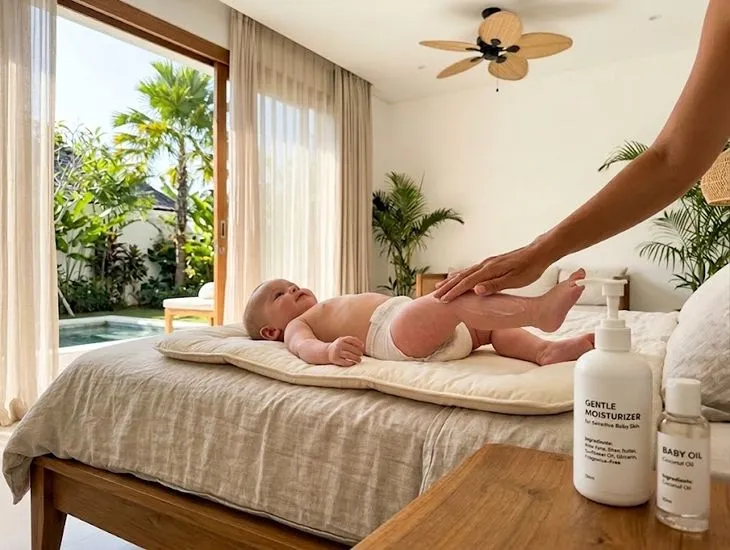
Moisturizer Ingredients for Safe Baby Skincare in Bali
Parents relocating to tropical climates face challenges with pediatric skin health. The high humidity and intense sun changes how an infant’s skin stays hydrated. Ignoring these environmental factors leads to discomfort and persistent rashes for the child.
Expatriates often struggle to find reliable guidance while adapting to busy work schedules. A weakened skin barrier invites irritation from sweat and pollutants. When parents lack time to research local regulations, they might purchase products with hidden allergens.
Applying inappropriate lotions traps heat and worsens existing eczema. This causes sleep disruptions for the infant and impacts the parents’ work. A professional babysitter manages this routine to ensure correct product application. Using safe baby skincare in Bali ensures your child remains healthy.
You can check official World Health Organization guidelines to understand the requirements for monitoring infant health. These global standards provide a baseline for protecting sensitive skin from external environmental irritants and common tropical allergens.
Pediatric Guidance for Skincare
Pediatricians emphasize that an infant has a weaker skin barrier than an adult. Their skin loses moisture rapidly in tropical regions. Medical experts advise selecting creams formulated exclusively for infants.
Products must be simple and free from unnecessary additives. The clinical recommendation involves applying a thick cream at least twice daily. Caregivers should apply the product immediately after bathing to lock in moisture.
Medical reviews show that certain ingredients prevent water loss from the skin. Frequent climate shifts between air-conditioned rooms and humid outdoors demand barrier support. A structured routine minimizes the risk of dry or cracked skin.
Ingredients for Moisture
Identifying beneficial components is the foundation of a healthy routine. Emollients and occlusives form a protective layer on the skin. This prevents vital hydration from escaping the infant’s delicate skin.
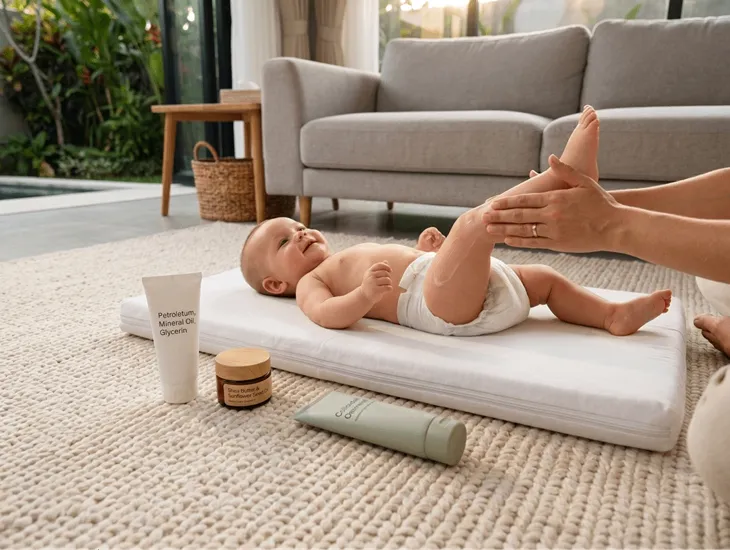
Doctors recommend ingredients like petrolatum, mineral oil, or shea butter to protect the skin. Sunflower seed oil also provides excellent barrier support. Humectants like glycerin are essential for drawing water into the skin.
Colloidal oatmeal serves as a therapeutic ingredient for dry or eczema-prone conditions. Studies demonstrate its efficacy in reducing itchiness and supporting skin health. Parents must prioritize products labeled as free from dyes or parabens.
Irritants to Treat with Caution
Understanding what to avoid is important for pediatric health. Chemical patterns in certain products frequently provoke reactions in young children. Added fragrance is a leading cause of skin irritation.
Many top-selling infant moisturizers contain perfume. Preservatives like phenoxyethanol prolong shelf life but irritate sensitive skin. Long-term exposure to these chemicals often triggers allergic responses.
Sulfates and alcohols serve as common irritants in commercial washes. Using adult cosmetics on an infant is dangerous. Products containing retinol or active acids cause damage to an infant’s skin.
Local Regulatory Standards
Navigating safety involves understanding local regulatory frameworks. The National Agency of Drug and Food Control oversees all pediatric products. Parents must look for a BPOM notification number on the packaging.
This registration confirms the manufacturer has submitted safety laboratory testing results. Approved labels display clear ingredient lists and usage instructions. This transparency helps parents verify that the formulation is safe.
A local guide for tropical climates advises against using heavy products that trap sweat. Selecting tested items formulated for high humidity prevents heat rashes. Halal certification provides an additional layer of manufacturing oversight.
Managing Sun and Insect Protection
Protecting skin involves more than just hydration. Daily exposure to high UV levels and insects requires a layered approach. Children need broad-spectrum, water-resistant sunscreen with high SPF.
Mineral filters utilizing zinc oxide or titanium dioxide are optimal for reducing risks. Local clinics recommend mosquito repellents containing picaridin. Caregivers must apply products correctly to prevent diseases from insects.
The caregiver must apply the moisturizer first on clean skin. They follow this with sunscreen and finally the insect repellent. Applying products in the wrong order compromises their efficacy.
Real Story: Skin Care in Sanur
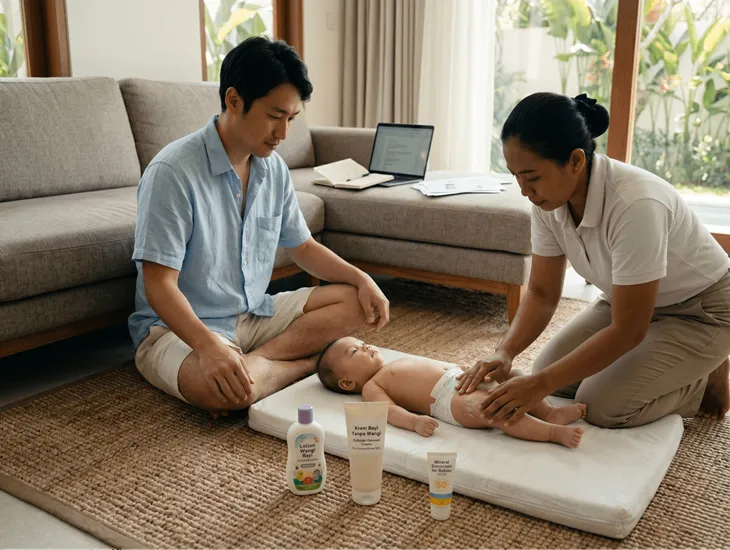
Kenzo identified a skin health deficit shortly after arriving in Sanur. His son developed a dry rash that disrupted the infant’s sleep and Kenzo’s project deadlines. He initially purchased a random lotion that caused immediate irritation.
The scented lotion trapped sweat and worsened the infant’s mood. This derailed Kenzo’s professional timelines during his first month. He hired a specialized agency to provide a vetted caregiver familiar with tropical health.
The babysitter immediately used a fragrance-free colloidal oatmeal cream. She layered the cream correctly under a mineral sunscreen. Within a week, the infant’s skin healed, and Kenzo successfully returned to his work schedule.
Daily Protection Checklist
Establishing a consistent protocol minimizes the risk of skin issues. Parents should create a checklist outlining products and application times. The primary rule involves verifying the BPOM registration number.
Ensure the selected cream contains zero medicinal actives or strong oils. Prioritize thick creams over thin lotions for maximum hydration. Confirm the ingredient list features dimethicone or shea butter.
Avoid items containing harsh alcohols or high-foaming surfactants. These strip natural oils from the infant’s skin. Always conduct a patch test before using a new formulation on the forearm.
Professional Babysitter Support
Managing pediatric skin health involves continuous observation. Expecting untrained staff to understand barrier repair often leads to complications. A professional babysitter possesses the training to identify early warning signs.
They monitor for eczema flares or heat rash and communicate changes to parents. Trained caregivers handle delicate areas around the eyes and mouth safely. They coordinate moisturizer application with sun and insect protection accurately.
Using a professional service ensures that parental preferences are documented. If a substitute steps in, the routine continues without dangerous interruptions. Investing in specialized childcare protects the infant’s health and safe baby skincare in Bali.
FAQs about Safe Baby Skincare in Bali
Q: Why use fragrance-free moisturizers?
A: Fragrances are contact allergens that irritate an infant’s sensitive skin barrier.
Q: What is a BPOM number?
A: It is an official safety certification from the Indonesian government for products.
Q: Should I use lotion or cream?
A: Creams are thicker and better for hydration. Lotions often contain drying alcohols.
Q: Can a sitter apply repellent?
A: Yes. A trained babysitter applies age-appropriate repellents over the moisturizer.
Q: Are essential oils safe for babies?
A: No. Unvetted essential oil blends can cause severe allergic reactions and rashes.
Q: How often should I moisturize?
A: Apply it at least twice daily, especially after bathing, to lock in moisture.

