
Baby Skipping Crawling Stage: What Parents Should Know
Many expatriate parents worry when their infant bypasses traditional motor milestones. Observing a Baby Skipping Crawling Stage often triggers immediate anxiety about potential long-term developmental delays or cognitive issues.
Watching other toddlers in your local playgroup navigate the floor with ease creates significant pressure. You might feel isolated while managing a demanding remote career in a new country without family.
This stress impacts your productivity and peace of mind every day. Constant comparison leads to frantic internet searches for answers. You worry your child lacks the necessary core strength for future walking.
According to the Centers for Disease Control and Prevention, crawling is no longer a required milestone. However, seeing no independent movement at all is a valid concern for many expatriate parents.
Understanding normal mobility variations helps reduce this unnecessary panic. Many healthy infants find alternative ways to explore their environment. You can support their development through structured floor play and safe tummy time.
Hiring a qualified babysitter in Bali provides professional support for your child’s physical growth. These experts ensure your infant receives daily floor time while you focus on your business goals in Indonesia.
Table of Contents
Commonality of Skipping the Crawling Phase
Expatriate parents often feel concerned about a child skipping the hands and knees phase. Statistics indicate that up to 15 percent of infants bypass traditional floor movement entirely before walking.
The normal window for independent mobility is quite broad. Most infants typically begin moving between six and twelve months of age. Some rely on rolling or bear walking to explore their environment effectively.
Approximately 7 percent of typically developing children move straight to walking during their first year. They often skip the floor phase and begin pulling to stand early. This pattern is biologically normal.
Medical bodies now focus on overall motor progress rather than specific styles. As long as your child achieves independent movement, the exact method is less critical. Coordination develops through various activities.
Providing a safe surface for movement allows infants to find their own pace. Consistency in floor time encourages natural experimentation with different poses. Your child will discover the most efficient way.
Normal Reasons for Alternative Mobility
Alternative mobility methods often replace classic crawling. Many infants become highly efficient at belly crawling or scooting on their bottoms. They reach their desired destination without ever using their knees for support.
Strong motivation to stand also plays a significant role. Some children prefer pulling up and cruising along furniture early. They spend less time on the floor because they find upright movement rewarding.
Limited floor time can impact crawling patterns significantly. Infants who spend too much time in bouncers or swings have fewer practice opportunities. Providing a safe surface for independent exploration is vital.
Cultural caregiving patterns also influence motor milestones. In cultures where babies are carried frequently, the crawling phase may be shorter. These infants often transition directly to independent standing and walking.
A professional babysitter in Indonesia understands that a Baby Skipping Crawling Stage is often a normal preference. They prioritize daily tummy time to build necessary upper body strength for your child.
Differences Between Typical Progress and Red Flags
Identifying typical progress helps reduce parental stress. Your infant is likely progressing well if they use any independent mobility. This includes rolling, scooting, or cruising while using both body sides equally.
Using both arms and legs effectively is a positive sign. Infants should also be able to get into a sitting position without assistance. These skills indicate that gross motor development is advancing.
Red flags require immediate attention from a pediatric professional. Consult a doctor if your nine-month-old shows no purposeful movement. Extreme muscle stiffness or floppiness also warrants a thorough medical review.
Consistently using only one side of the body is concerning. Always track if your child loses previously acquired skills. A professional babysitter in Indonesia can help document these patterns for your pediatrician.
Early intervention provides the best outcomes for motor concerns. Addressing delays promptly ensures that your child receives targeted support. Reliable observations from caregivers facilitate faster clinical assessments when they are needed.
The Developmental Benefits of Early Movement
Crawling offers several benefits even if it is brief. It develops essential strength in the shoulders, hips, and hands. These areas are critical for future physical tasks and fine motor coordination.
Bilateral coordination improves when infants move their limbs in an alternating pattern. This helps the two sides of the brain work together. Developmental movement patterns also enhance spatial awareness and depth perception.
Navigating close to the ground provides unique visual perspectives. Infants learn to judge distances and avoid obstacles while moving. This experience builds confidence as they prepare for more complex physical challenges.
Movement stimulates the vestibular system, which manages balance. Consistent physical activity supports the development of a strong equilibrium. These foundational skills are important for walking and running in later stages.
Encouraging any form of independent mobility is beneficial for growth. Active play increases curiosity and desire to interact with the surroundings. A healthy environment promotes both physical and mental exploration.
Supporting Physical Skills Through Floor Play
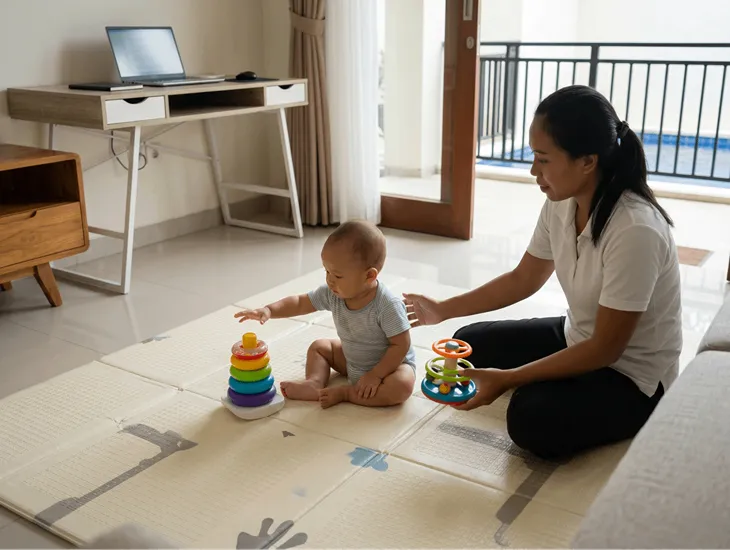
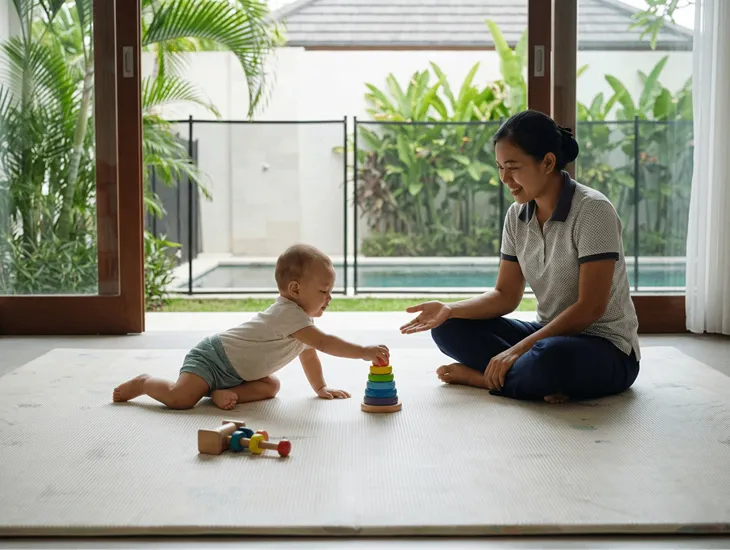
Caregivers can support physical skills without forcing a Baby Skipping Crawling Stage. Provide frequent opportunities for supervised tummy time daily. Use interesting toys to motivate your child to reach and pivot.
Games that encourage weight-bearing through the arms are very effective. Place toys across the midline to promote reaching and stretching. These activities build the core strength necessary for future mobility.
Obstacle courses made of soft cushions challenge coordination safely. Encourage your child to climb over low objects while you supervise. This active play supports the development of complex motor skills.
Using vertical surfaces encourages infants to pull to stand. Secure mirrors or interactive toys to the walls at various heights. This motivates them to change positions and strengthen their leg muscles.
Interactive play with an adult makes physical practice enjoyable. Roll balls toward your child to encourage movement and reach. These positive experiences build the confidence needed for independent floor exploration.
Real Story: Tracking Milestones in Sanur
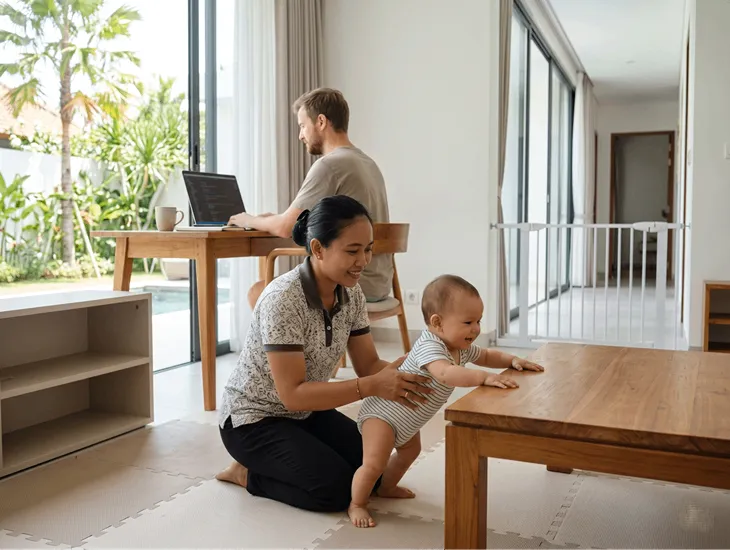
Joseph gripped his lukewarm coffee, staring at the lines of code on his laptop. His daughter sat motionless on the rug, her lack of movement echoing his mounting professional stress.
The software sprints required absolute focus, but his mind constantly drifted to missed milestones. He noticed other infants in the neighborhood were already navigating villa floors with growing curiosity and strength.
His previous helper lacked the specific training to identify subtle motor shifts or encourage independent mobility. He felt trapped between a high-pressure career and the guilt of his daughter’s developmental plateau.
Joseph hired a vetted caregiver through our agency to implement structured floor sessions. The professional immediately introduced sensory play and guided movements that encouraged the baby to begin pushing up.
The villa transformation was almost immediate once the pressure of constant monitoring was lifted. Joseph returned to his coding with clear focus, receiving daily photos of his daughter’s successful attempts.
Within a few short weeks, she was pulling herself to stand against the heavy teak furniture. This expertise allowed the whole family to flourish during their professional stay in Indonesia.
Ensuring Safety for Mobile Infants in Villas
Mobile infants require constant vigilance in tropical villas. You must secure all heavy furniture to the walls to prevent tipping. Block access to stairs and open balconies with sturdy, childproof gates.
Pool safety is a critical priority for families in Indonesia. Ensure your villa in Bali has a compliant pool fence and locking gate. Never leave a mobile child unsupervised near water.
Clear all small objects and electrical cords from the floor. Infants explore their world with their mouths and hands. A professional babysitter in Bali provides an extra pair of eyes for safety.
Check for poisonous plants or low-level hazards in the garden. Mobile children can move surprisingly fast toward forbidden areas. Securing the perimeter ensures they can explore their environment without facing risks.
Maintain a clean floor surface to prevent hygiene issues. Use non-toxic cleaning products to ensure a safe environment for curious hands. Regular inspections help identify new hazards as your child moves.
How Professional Caregivers Track Motor Patterns
A professional babysitter in Bali tracks daily motor milestones meticulously. They observe how your child moves and interacts with their environment. This data provides valuable insights for your future pediatric consultations.
Documenting these patterns helps identify potential issues early. Caregivers note if a child favors one side or struggles with weight-bearing. This objective observation is essential for parents with busy professional schedules.
Clear communication ensures that everyone remains informed about your child’s progress. Daily reports detail new skills and physical activities. This transparency builds trust and provides peace of mind while you work.
Professional assistants understand that a Baby Skipping Crawling Stage requires careful monitoring. They ensure that therapeutic play occurs consistently during the day. This coordination maximizes the effectiveness of medical interventions.
Watching for subtle changes in coordination requires specialized training. Professional assistants understand the nuances of infant motor development. Their presence ensures your child receives high-quality attention during critical growth phases.
FAQs about Baby Skipping Crawling Stage
Q: Is it normal for my baby to skip crawling?
A: Yes, skipping the crawling phase is experienced by roughly 7 percent of healthy infants.
Q: When should I worry about mobility?
A: Seek advice if your child shows no purposeful movement by nine months.
Q: Does skipping crawling affect brain development?
A: Research has not consistently linked skipping crawling to later cognitive problems.
Q: How can a babysitter in Bali help?
A: They provide daily supervised floor time and track developmental patterns accurately.
Q: What are alternative crawling styles?
A: These include belly crawling, bear walking, and scooting on the bottom.
Q: Is tummy time still important for walkers?
A: Yes, it builds core and upper body strength for all infants.

