
Review Us
Developmental Activities in Bali 2026 – Supervised belly play, motor skill exercises, and sensory activities for expatriate infants
author

Tummy Time for Babies: Benefits and How to Do It

Expatriate parents in Indonesia often struggle to prioritize infant developmental activities. Managing a business while overseeing early physical milestones creates immense daily pressure. You might constantly worry your child lacks sufficient core strength.

Neglecting these essential floor sessions leads directly to delayed motor control and physical weakness. Infants may develop flat spots on their heads from excessive back sleeping. This lack of movement disrupts their overall developmental progress.

Professional help ensures your child meets critical milestones without adding to your workload. A qualified babysitter in Indonesia integrates physical exercises into the daily schedule. This expert support allows you to focus completely on your career.

According to the National Institutes of Health, supervised belly play is vital for all healthy infants. It specifically targets the neck and shoulder muscles needed for rolling. Early intervention prevents long-term physical coordination issues.

Consistent tummy time transforms your child’s physical abilities and natural confidence. Expert guidance ensures each session remains entirely safe and highly productive. You will witness significant improvements in their balance and muscular strength.

Essential Core Benefits for Infants

Physical development depends heavily on regular movement and targeted muscle engagement. Structured Tummy Time for Babies strengthens the neck, shoulders, and arms. These vital muscle groups remain foundational for later skills like sitting independently.

Weight-bearing exercises through the arms improve hand opening and grip strength directly. Babies also develop better visual tracking skills as they explore their immediate environment. This position encourages them to lift their heads and scan.

Regular sessions prevent positional plagiocephaly, which causes flat spots on the back of the head. Back sleeping is mandatory for safety but requires daytime counterbalancing. Proactive floor play protects your infant’s natural head shape.

Infants gain superior trunk control through frequent prone play activities. This stability is absolutely essential for maintaining balance during complex physical movements. It also supports the rapid development of precise fine motor skills.

Daily exercises promote sensory integration by exposing the child to various new textures. Feeling a firm mat or soft blanket provides important tactile feedback. This sensory experience helps them process environmental information much more effectively.

Starting Tummy Time Safely by Age

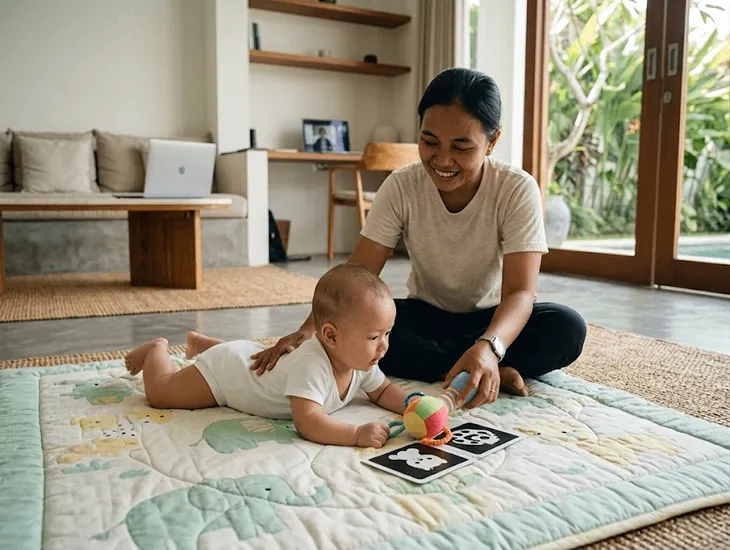
Motor Skill Support in Bali 2026 – Caregiver assisting an infant with progressive belly play exercises on a firm mat

Implementing Tummy Time for Babies should begin soon after arriving home. Start with one or two minutes per session several times each day. Early introduction helps your infant adjust without experiencing unnecessary frustration.

Aim for twenty minutes of total daily activity by the second month. Break this duration into short segments when the child is alert. Frequent, brief exposures are highly effective for beginners building stamina.

Progress to sixty minutes of total play by the fourth month. This duration supports the high energy levels needed for rolling and pivoting successfully. A dedicated assistant ensures your child reaches these specific goals consistently.

By six months, infants should engage in ninety minutes of prone play daily. This stage involves more active movements like reaching out and pushing up strongly. Your babysitter in Bali manages these transitions seamlessly.

Older infants use this floor time to transition directly into crawling. They begin to pivot and move their bodies with increasing coordination and speed. A professional caregiver provides the necessary open space for these movements.
Practical Positions for Younger Babies

Newborns often prefer the chest-to-chest position while reclining securely with a caregiver. This skin contact provides deep comfort while naturally encouraging the baby to lift their head. It builds a strong emotional bond simultaneously.

The football hold is another highly effective method for infants who dislike the floor. Carry the child face-down along your forearm while supporting their chest and chin. This provides a different visual perspective.

Placing the child across your lap provides gentle support and subtle soothing movement. You can rock them slowly to improve their overall tolerance. This variety keeps Tummy Time for Babies engaging and low-stress.

Side-lying is a useful alternative for infants struggling with full belly play. Support them with a rolled towel behind their back to maintain correct posture. This allows them to reach for toys comfortably.

Utilizing a nursing pillow can provide the necessary elevation for pushing up. Prop the infant’s chest on the firm pillow with their arms positioned forward. This makes lifting their heavy heads significantly easier.

Engaging Techniques for Floor Play

Floor play becomes significantly more enjoyable with the right visual stimulation. Place high-contrast pictures or unbreakable mirrors on the floor to capture their attention. This motivates them to lift their heads higher.

Use rolled towels under the chest for infants who struggle to push up initially. This extra support makes the session much less frustrating for beginners. Remove their socks to allow better traction on play mats.

A babysitter in Indonesia utilizes targeted sensory toys to maintain your child’s interest. They rotate objects frequently to prevent boredom and encourage reaching across the midline. This active participation accelerates motor skill development.

Singing and talking at eye level encourages the infant to stay actively engaged. Your voice provides the necessary reassurance during a physically demanding task. Positive reinforcement builds their confidence and willingness to try harder.

Scattering colorful objects just out of reach encourages the child to pivot. This specific movement strengthens their core and hip muscles significantly over time. It also improves their spatial awareness as they navigate obstacles.

Real Story: Building Strength in Pererenan

Leo sat in his Pererenan villa, struggling to focus on his work. The rhythmic hum of the air conditioner failed to drown out his daughter’s crying. Mia consistently protested whenever placed on her back.

He worried deeply about her physical progress and lack of core strength. The intense tropical humidity made her fussy during any physical exertion. Leo felt completely overwhelmed balancing his software sprints with childcare.

He hired a vetted babysitter in Bali to provide structured developmental support. The caregiver arrived with a firm play mat and several high-contrast books. She identified that Mia needed shorter, highly frequent exercise sessions.

The professional integrated prone play smoothly after every single diaper change. She sat on the floor, singing softly and using mirrors to keep Mia engaged. The infant’s initial frustration slowly turned into curious exploration.

Within three weeks, Mia began pushing up on her forearms with clear confidence. Leo noticed a massive improvement in her neck control and overall physical stamina. He successfully completed his software project without constant interruptions.

The expert caregiver provided the daily structure their household desperately lacked. Leo felt empowered as he learned the proper techniques to support Mia himself. Their bond strengthened immensely through these shared developmental victories.

Safety Protocols for Supervised Sessions

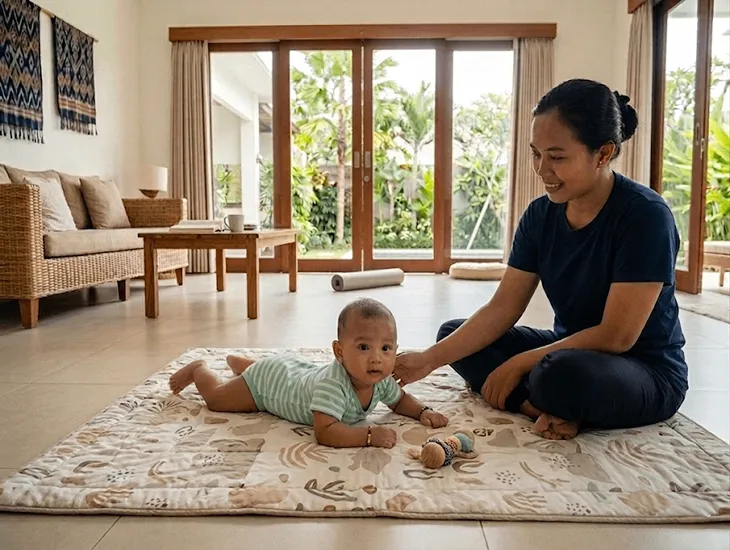
Infant Safety in Bali 2026 – Professional babysitter supervising awake floor play on a safe firm surface

Strict supervision remains the most critical safety rule for infant floor play. You must never leave an infant unattended while they rest on their belly. Constant observation ensures their airway always remains perfectly clear.

Always use a firm, flat surface on the floor for all physical play. Avoid soft sofas or beds where the child might roll into dangerous gaps. These plush surfaces pose a severe risk of suffocation.

Stop the session immediately if the infant shows signs of extreme distress. Fatigue or spitting up requires a mandatory rest period and a clean environment. Reassess their comfort level thoroughly before attempting the position again.

Ensure the designated play area is entirely clear of small objects or pets. A professional babysitter in Bali maintains a highly secure perimeter for your child’s exploration. This vigilance prevents accidents during active movements.

Keep the floor temperature comfortable and block direct, harsh sunlight. Intense tropical light can distract the infant or cause serious physical discomfort quickly. A controlled indoor environment allows them to focus entirely on exercising.

When to Consult a Professional

Most healthy infants follow a predictable path of physical development and muscular strength. However, you should consult a doctor if your child shows zero progress. A complete lack of head control requires immediate clinical attention.

Consistently leaning the head to only one side requires a thorough medical review. This behavior could indicate a muscle issue like torticollis that demands specific physical therapy. Prone play must be monitored very carefully.

A professional babysitter in Bali tracks these subtle signs during daily routines. They provide detailed written logs of your child’s physical movements and reactions. This accurate documentation proves invaluable for your next pediatrician visit.

Seek advice if your infant refuses to bear weight on their arms by month six. Difficulty pushing up can signal underlying neurological or physical developmental issues. Early clinical assessment ensures your child receives proper support.

If your child experiences breathing difficulties during floor sessions, stop all activities immediately. Persistent struggle or unusual lethargy after play must be discussed with a doctor. Safety always remains the absolute priority for your family.

Screening Caregivers for Developmental Support

Interviewing potential staff requires asking highly specific questions about infant physiology. Ask exactly how they would handle a child who cries during floor sessions. Their answers reveal their true level of patience and expert knowledge.

A qualified assistant must understand the immense importance of tracking physical milestones. They must follow the mandatory back-to-sleep and awake-play guidelines strictly. This ensures your child stays completely safe while exercising.

Verify their practical experience with different positions and engagement techniques for infants. A babysitter in Indonesia should know how to utilize mirrors and toys effectively. This proven expertise guarantees a high standard of developmental support.

Ask for references that specifically mention their proactive role in physical activities. Hearing from other expatriate families provides immense peace of mind regarding their capabilities. You need a caregiver who is genuinely active and engaged.

Ensure they are entirely willing to document progress and follow your specific routines. Consistency is the primary key to achieving motor milestones during your stay. Clear communication fosters a highly successful partnership with the caregiver.

FAQs about Tummy Time for Babies

Q: Why is Tummy Time for Babies absolutely necessary? 

A: It builds the core muscle strength required for rolling, sitting, and crawling safely.

Q: When should we start these floor sessions? 

A: You can begin with very short sessions as soon as you return from the hospital.

Q: How much total time is needed daily? 

A: Aim for ninety minutes of total prone play by the fourth month of age.

Q: What if my baby absolutely hates the position? 

A: Use short intervals and provide toys or eye contact to improve their tolerance gradually.

Q: Can a professional babysitter help with this? 

A: Yes, they build regular play into the schedule to support your infant’s physical development.

Q: Is it safe to sleep in this position? 

A: No, this position is strictly for awake play to prevent sudden severe health risks.

Need help with Tummy Time for Babies? Chat with our team on WhatsApp now.